AI & Automation
8 min readHow to choose an AI agency in London or anywhere else
A buyer's checklist for UK owners: the named example to ask for, who maintains the workflow, the data terms to get in writing and the red flags to walk away from.
How to choose an AI agency is harder than it looks, because nearly every agency now sells AI and the decks look the same. You are spending real money on a system that will touch your customers and your data, so you need a way to separate a credible team from a risky one before you sign. This checklist covers what to ask, what to check and the trade-offs to weigh.
How to choose an AI agency: what to see before you sign
Start with what the agency shows you, not what it says. A good agency tells you the bad news as readily as the good, involves you in the big decisions and sends updates that tell you something you can act on, according to Appinventiv's guide to choosing an AI agent development company. That is a vendor writing about vendors, so test the principle against the agency you're talking to rather than taking it as a rule.
The risks are real. Gartner expects more than 40% of agentic AI projects to be cancelled by the end of 2027, and the reasons it gives are escalating cost, unclear business value and inadequate risk controls, as Voiceflow's summary of Gartner's findings sets out. Your job is to find out whether the agency has a plan for each of those three before you pay.
Ask for a named example you can verify
A named example means a client name, what was built, what it replaced and what changed afterwards. If the agency says it can't name clients because of NDAs, that's a reasonable position, but it shouldn't end the conversation. Ask for the industry, the company size, the workflow before and after, and whether you can speak to that client directly.
Then verify it. Look at the live thing if it's public: the chatbot on the site, the booking flow, the reply that goes out. Ask the client one question that only someone who used the system would know, such as what broke in the first month and how long the fix took. Vague praise and a logo on a slide don't count.
Reddit is a useful place to check reputations. Buyers in the r/findaiagencies community suggest asking for a proof of concept and checking reviews on Google, social media comments and Reddit, rather than trusting the agency's own testimonials. The threads we looked at are general rather than London-specific, so don't assume UK buyers gather there in numbers. Treat them as one input among several.
Who maintains the workflow after launch
Most of the damage in AI projects happens after launch. Ask three questions in writing: who fixes it when it breaks, who changes it when your prices, policies or products change, and how quickly each of those happens.
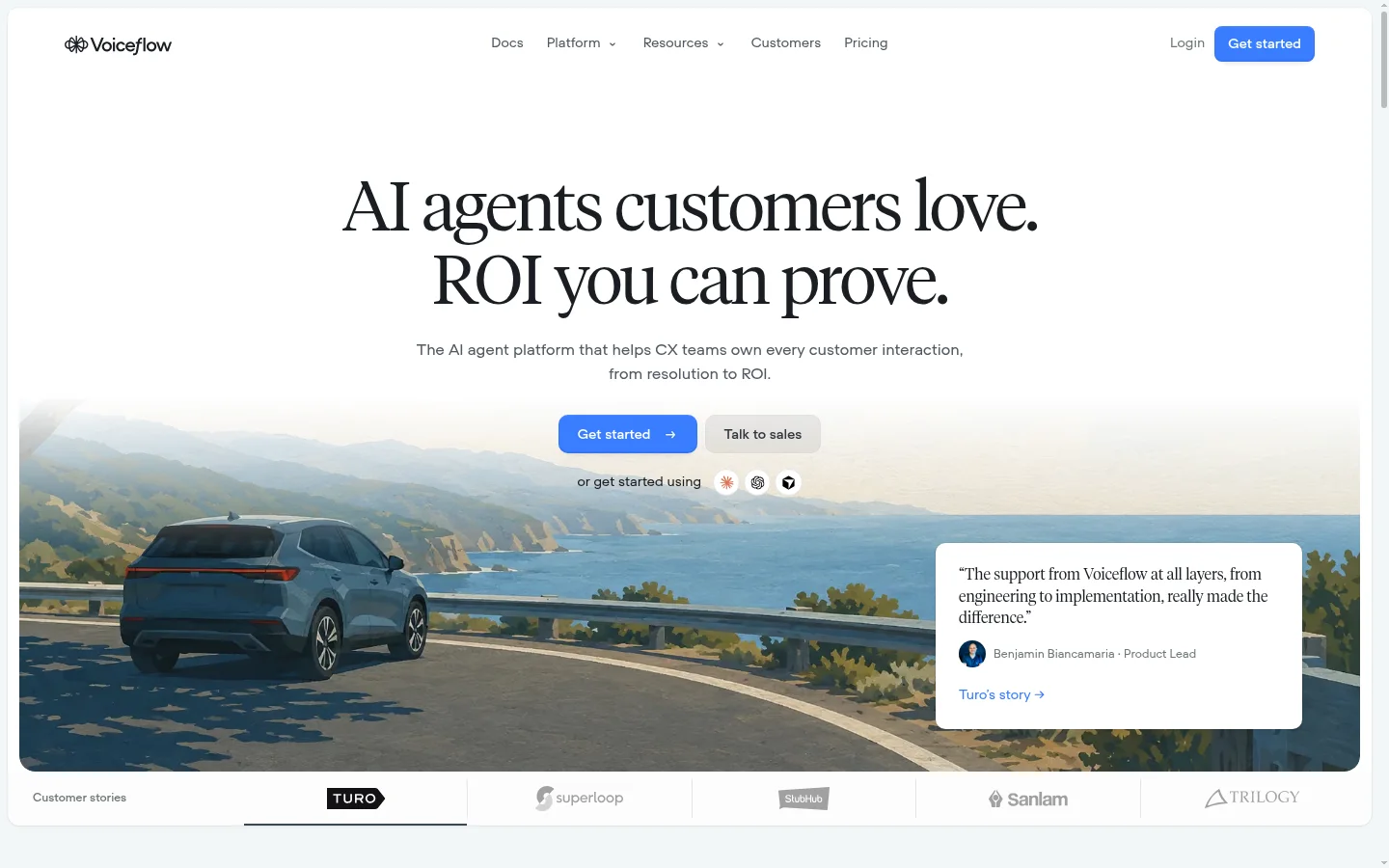
Check whether you can change it yourself. Voiceflow argues you should score vendors on whether a non-engineer can change the agent's behaviour live, because if every policy tweak needs an engineering ticket, the agent goes stale (Voiceflow). Ask for a short demo where your ops person changes one reply while the agency watches.
Architecture matters too. Zendesk's buyer's guide says the right design depends on business requirements, technical resources, governance needs and budget, and that you should pick a model your teams can realistically deploy, maintain and scale (Zendesk's AI agent buyer's guide). A clever build that only its author can touch is a liability, not an asset.
Ask for a named owner, a response time written into the contract, documentation that explains how the workflow runs, and a handover plan that says what happens if the agency stops trading.
Data handling and access: what to get in writing
If the workflow touches names, emails, phone numbers, bookings or chat logs, you are giving personal data to a supplier. Under UK GDPR, a written contract between you and any processor is the normal requirement, so ask for a data processing agreement before anyone gets access, not after the pilot. The ICO publishes guidance on this, and a solicitor should review anything beyond a standard contract. Treat this section as a checklist, not legal advice.
Get these in writing:
- Where the data is stored, and in which country
- Which third-party AI model providers will see it, and whether they use it to train their models
- Who has admin access, and how that access is removed at the end
- How long data is kept, and how it is deleted on request
- How you'd be told of a breach, and how quickly
- Who owns the prompts, workflows, knowledge base and exported data when the contract ends, and whether you can take them with you
If the answer to any of these is 'we'll sort it out later', stop there.
Get the contract before anything connects
Your systems
Names, emails and phone numbersBookings and chat logsBefore access
Written contract with the agencyData processing terms agreedLive workflow
Connected to agreed systems onlyRed flags: promised results with no baseline
The biggest red flag is a promised result with no starting number. 'We'll cut your admin by half' means nothing if nobody has measured how many hours the admin takes now. Before any build, you need a baseline: hours spent on the task each week, average response time, conversion rate, cost per lead, whatever matters to your business.
Measurement is also where agencies pick their favourite metric. Voiceflow advises against accepting deflection rate as the success measure. Ask for resolution instead, and ask to see a wrong answer traced back to the knowledge source that caused it (Voiceflow). The same source cites Google Cloud's 2025 ROI of AI Report, which found that 74% of executives report ROI within the first year of agent deployment. That figure tells you little until you know how the agency defines ROI and against what starting point.
Other flags to watch for:
- They want to skip the pilot and sell you a full operations transformation in the first meeting. re:solved's view is that such an agency is selling to you, not solving for you (re:solved).
- They won't name the AI model vendor or the tools they'd connect to your systems.
- They can't explain the workflow in plain English to someone who doesn't code.
- Ownership of the work is unclear, or it sits in their account rather than yours.
How to run a paid pilot before committing
A pilot is the cheapest way to find out whether an agency can deliver. Pick one workflow, not the whole business. Good candidates are a lead follow-up sequence, a set of standard customer replies, or a weekly report someone currently builds by hand.
Agree the terms before day one:
- A baseline measurement of the current process
- A success measure in writing, such as resolution rate, hours saved or response time
- A fixed fee for the pilot, and a clear end date
- Data processing terms and access rules signed before any system is connected
- A review of at least one wrong answer, traced to its cause
- A go or no-go decision, with the handover terms applying either way
Our AI Systems and Automation service starts at $499 and typically runs 1 to 3 weeks, depending on scope, so you can see a live result quickly. Whichever agency you pick, the pilot should end with you owning what you've seen working.
Cost, scope and trade-offs versus building in-house
We can't give you a reliable UK price range, and anyone who quotes a fixed figure without asking about scope is guessing. The cost depends on how many workflows you want, how many systems they connect to, how messy your data is and whether you pay for ongoing maintenance. Our guide to AI automation agency costs works through what moves the number, and our article on whether AI automation is worth it for a small business gives you a way to test your own case.
An agency isn't always the right answer. Compare the options honestly:
| Option | Often the better choice when | What to watch for |
|---|---|---|
| Hire in-house | AI is central to your product and you'll change it every week | Salary, recruiting time, and one person holding all the knowledge |
| Platform subscription | The workflow is standard and one person can configure it | Limits when your process is unusual, and the configuration work stays with you |
| One-off agency build | You need something working fast and have no technical staff | Dependence on the supplier, so the handover terms decide everything |
| Monthly agency retainer | You need ongoing changes and have steady revenue | A recurring cost for as long as you keep the retainer |
Our own offers have fit limits, and we'd rather you knew them. The Agency is a monthly plan from $499 to $2,999, set by scope and agreed before we start. It suits an established business with steady revenue, and it's a poor fit below about $5k a month in revenue. The Accelerator takes a fee from $299 to $999 plus a share of up to 15%. It suits an early or fast-growing business with real upside, and it's a poor fit for a mature business or a local shop with little room to scale.
Pilot first or transformation first
Pilot first
- One workflow, measured today
- Success measure agreed before day one
- Decide after the pilot results
Transformation in the first meeting
- Whole business on the table
- No baseline or clear success measure
- Decision needed before any proof
If an agency skips the pilot and pitches a full transformation, treat it as a sale, not a solution.
Where UK buyers compare notes, and how far to trust it
UK buyers compare notes in several places: Reddit threads, LinkedIn, Google reviews, and peers in your own sector who will tell you about the agency that went quiet after the invoice. Use them, but know their limits. Reviews can be curated, and a stranger on a forum doesn't know your industry or your systems.
The most useful test is a reference call with a specific question. Ask what broke in month three, who fixed it and how long it took. Then ask the agency for a second reference you didn't choose. A good agency will have one. Reviews, reference calls and a live example together tell you far more than the case study on the homepage.
Where to start
- Write down the single workflow you'd hand off first, and measure it today.
- Send each agency the questions above and ask for written answers.
- Get the data processing terms before any system is connected.
- Price a pilot with a clear success measure, not a full transformation.
- Book a Free AI Audit to see which tasks AI can realistically take on.
If you want a second opinion before you talk to anyone, get your free AI plan, or book a call with our team. The Free AI Audit is a 30-minute call with a strategist. You leave with your top 10 tasks AI can take over and a step-by-step plan you keep, with no card and no obligation. Then you can measure what we'd propose against the checklist above.
Sources
See it in practice

Built by Pensact
Go Way · A ride-hailing app for Egypt where riders pick the offer that suits them, across car, scooter or tuk-tuk. We built its systems and CRM.
Questions people ask
How do I know if an AI agency is any good?
Ask for a named example you can check, a reference you didn't choose, and a written baseline for any result they promise. A good agency will also show you the workflow working and tell you the risks plainly. If they can't do all four, treat that as your answer.
What should an AI agency ask me before starting?
A credible agency asks which workflow you want to change, how it is measured today, which systems and data it will touch, and who on your team will own it after launch. You should expect questions about data and access before any talk of tools.
How much does it cost to hire an AI agent?
It depends on scope: how many workflows you want, which systems they connect to, how clean your data is, and whether you pay for ongoing maintenance. Ask for a fixed quote after a scoping call, and compare it with the cost of the task it replaces.
Which AI agency in London is best for a small business?
There isn't one best agency, and anyone who names one without knowing your workflow is guessing. Shortlist using the checklist above, then compare a live example, an independent reference and the written data terms. Ask each agency about its minimum engagement, since some suit larger budgets.
Keep reading
AI automation agency pricing: retainer, project or per workflow?
Project fee, retainer, usage or outcome? Here is how each AI automation pricing model bills, who carries the risk, and how to compare quotes over 12 months.
Noah Hany · 4 Nov 2026
The best AI automation tools for small business in 2026
The best AI automation tools for small business, grouped by job, with where each one breaks and when you need a custom build instead.
Noah Hany · 3 Nov 2026
AI automation agency vs in-house team: which fits your business?
Agency or one in-house hire? We compare cost, speed, control and risk, then give you a plain rule based on revenue, backlog and who will manage the work.
Noah Hany · 3 Nov 2026