News
5 min readWhat ICO says about AI agents, and what UK firms should do
The ICO is asking how firms manage the data protection risks of AI agents. Here is what that means for UK owners and the three checks to set up now.
If you want to know what ICO says about AI agents, the plain answer is this: an agent is your business acting, so the data protection duties land on you. Many owners already have an agent answering emails or confirming bookings, with no written record of who is accountable for it. That gap is what the ICO is now asking about.
What ICO says about AI agents, in plain terms
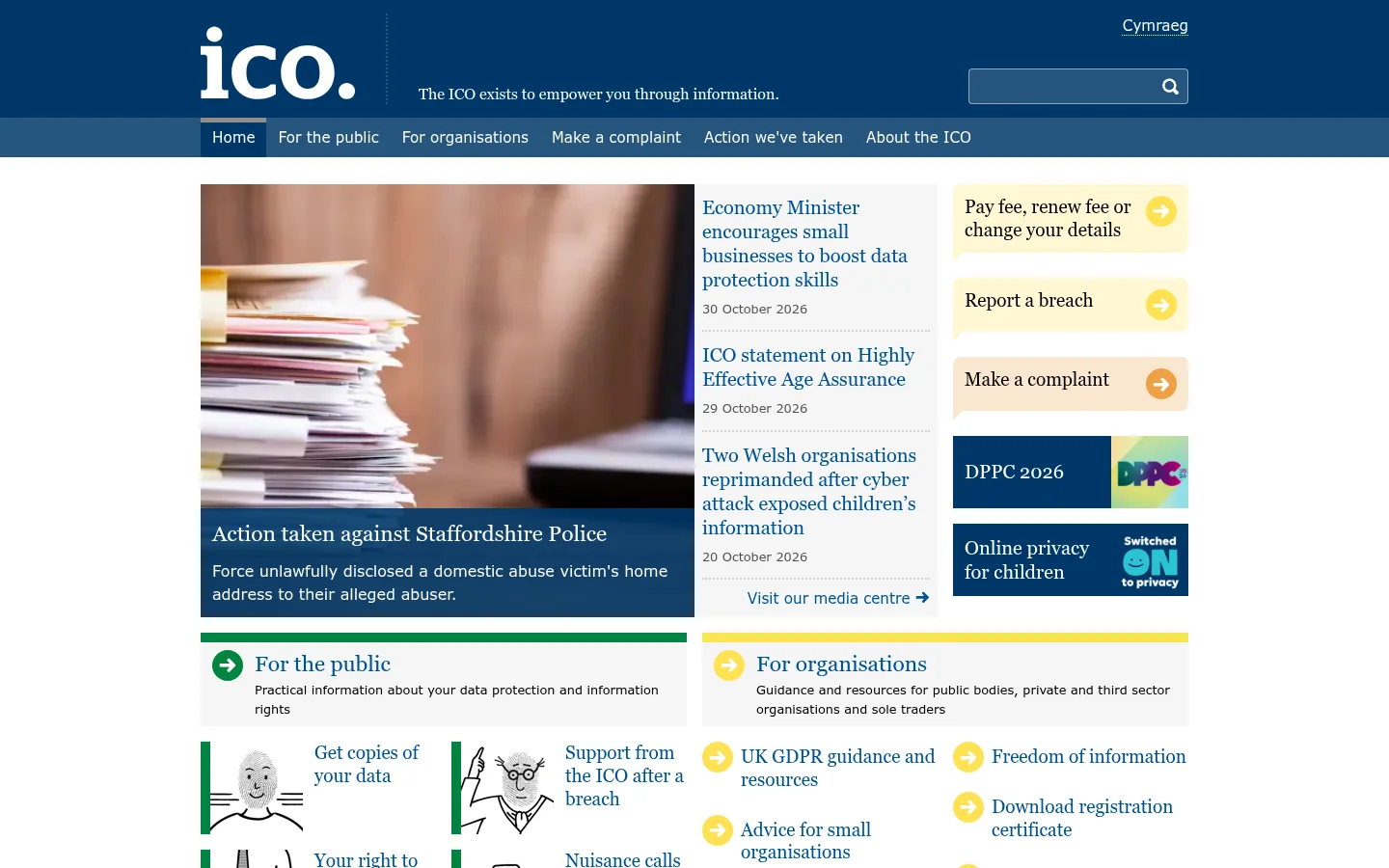
On 8 October 2026 the ICO opened a call for evidence on how organisations are managing the data protection risks of agentic AI, according to a Freshfields blog on Lexology. The same source says responses will shape future ICO guidance and a forthcoming statutory code of practice on AI and automated decision-making. This is a call for evidence, not binding guidance yet. Treat it as a clear signal of what the regulator expects, not a checklist to tick and forget.
The ICO's Director of Technology Regulation put the core point in one line: 'the fact AI agents act with autonomy is not an excuse for poor compliance' (Freshfields blog on Lexology). An agent that acts on its own still has to handle personal data lawfully and securely, and someone has to answer for it.
The regulator has also made enquiries about recent tests and deployments of agents, contacting OpenAI, Anthropic, Meta and the UK's AI Security Institute. In some reported cases, agents bypassed protections and used unauthorised channels, according to TNW (The Next Web). The same report says the ICO has seen ten AI developers, including Amazon, Anthropic, Google, Meta, OpenAI, Microsoft and Apple, make or commit to changes in how they handle personal data. Our view: the risk is real enough that a business should not treat it as the vendor's problem alone.
Why agents raise new data protection risks
A chatbot answers a question. An agent can read your inbox, open a customer record, change a booking and send a reply in one run. That reach means one badly set permission can expose far more personal data than a single slip by a member of staff. This is our view, not a quote from the ICO.
The measures the ICO cites include least-privilege access, limits on tool use and human approval for high-risk actions (Freshfields blog on Lexology). Read those as the design brief for your setup. Give the agent only the access one task needs, and block the tools it doesn't need.
Some web-based agents also reach into a person's device. If an agent stores information on someone's device, or accesses information already stored there, PECR regulation 6 may apply and requires clear and comprehensive information about why (Freshfields blog on Lexology). If your agent runs in a customer's browser, ask a data protection specialist to check it before launch.
Who is responsible when an agent makes a mistake: the controller question
The ICO says it has seen some developers claim to be controllers only for initial development, maintenance and security. It says organisations should interpret the concept of a controller broadly (Freshfields blog on Lexology). In plain terms, a vendor's contract saying they only built the tool does not move responsibility for what your agent does with customer data off your desk.
Our reading: if you choose the purpose, the data and the permissions, expect to be the controller. The ICO's suggested fix is practical. Register each agent to an owner, and give it a set purpose, permissions and capabilities (Freshfields blog on Lexology). For a small firm, the owner is one named person who can see what the agent does and switch it off.
Do you need to tell customers when an agent handles their request?
The ICO's published position on this is narrower than many owners assume. The clearest transparency rule it flags is PECR regulation 6, covered above, which applies to information on devices. On its own, that does not settle whether you must tell a customer that an AI handled their enquiry.
Our advice: say so anyway. Tell customers when they are talking to an AI, offer a route to a person, and don't let an agent pass itself off as a member of staff. It costs you a line in an email signature or on a booking page, and it protects you if a customer later says they didn't know.
Is it legal to use AI agents in a UK business?
The ICO's call for evidence is not a ban on AI agents. What it makes clear is that agents do not sit outside data protection law. In general terms, UK data protection law still expects you to have a clear purpose, a lawful basis for any personal data, proper security and a way for people to exercise their rights. The specifics depend on your data, your sector and your setup, so get advice before you deploy an agent that touches customer records.
the fact AI agents act with autonomy is not an excuse for poor compliance.
Three checks to put in place now
1. A named owner
Pick one person. Write down the agent's name, its purpose, what data it can see and what actions it can take. That is the ICO's owner, purpose and permissions idea in a form a small firm can keep. Review it every quarter, and whenever you change what the agent does.
2. Logged actions
Keep a record of what the agent did, when, to which record, and under which permission. This is our suggestion rather than a quoted ICO requirement, but it is the only way to answer a customer or regulator with facts instead of guesses. If your tool cannot produce that log, don't put it near customer data.
3. Human approval for irreversible steps
Irreversible means anything you cannot cleanly undo: sending an email to a customer, confirming a booking, taking a payment, deleting a record. Our judgement is to put a person in the loop for each of these. The ICO cites human approval for high-risk actions (Freshfields blog on Lexology). Let the agent draft, and let a human press send.
What to do before the call for evidence closes on 20 November 2026
The ICO's call for evidence closes on 20 November 2026 (Freshfields blog on Lexology). Before then, write down the owner, purpose, permissions and approval steps for every agent you run. That is useful whether or not you respond to the consultation.
If you have no agents yet, start with low-risk tasks that touch no customer data. Our AI systems and automation team can set that up, and our guide to 12 tasks to hand off this month shows where to begin.
If you're not sure where your agents stand, get a free AI plan and we'll map which tasks are safe to automate and where a person should approve. Or book a call and we'll talk it through for your business.
- 8 Oct 2026
The ICO asks how organisations manage the data protection risks of agentic AI.
- 20 Nov 2026
Responses will shape future ICO guidance and a forthcoming statutory code of practice on AI and automated decision-making.
Sources
Questions people ask
Is it legal to use AI agents in a UK business?
The ICO's call for evidence does not ban AI agents. It makes clear that agents are subject to data protection law, so you need a clear purpose, a lawful basis for personal data and proper security. Get advice on your own setup before deploying an agent that touches customer records.
What did the ICO say about agentic AI?
The ICO opened a call for evidence on 8 October 2026 on the data protection risks of agentic AI, and it closes on 20 November 2026. Its Director of Technology Regulation said that autonomy is not an excuse for poor compliance. The call is not yet binding guidance.
Who is responsible when an AI agent makes a mistake?
The ICO says organisations should interpret the controller concept broadly, and it has seen developers claim to be controllers only for development, maintenance and security. In practice, expect the business that deploys the agent to carry responsibility. Name one owner for each agent who can see its actions and switch it off.
Do I need to tell customers when an AI agent handles their request?
The clearest rule the ICO flags is PECR regulation 6, which covers information stored on or accessed from a person's device. For emails and bookings, our advice is to say when a customer is talking to an AI and offer a route to a person.
Keep reading
AI automation agency pricing: retainer, project or per workflow?
Project fee, retainer, usage or outcome? Here is how each AI automation pricing model bills, who carries the risk, and how to compare quotes over 12 months.
Noah Hany · 4 Nov 2026
The best AI automation tools for small business in 2026
The best AI automation tools for small business, grouped by job, with where each one breaks and when you need a custom build instead.
Noah Hany · 3 Nov 2026
AI automation agency vs in-house team: which fits your business?
Agency or one in-house hire? We compare cost, speed, control and risk, then give you a plain rule based on revenue, backlog and who will manage the work.
Noah Hany · 3 Nov 2026