Websites
10 min readApp development cost UAE: what a small business should expect
What a UAE app build involves, the six stages that drive cost, and how to compare quotes that rarely list the same things.
App development cost UAE is the first question most owners ask, and the online answers do not agree. One Dubai agency puts a mobile app between AED 30,000 and AED 600,000, while another puts its range at $40,000 to $300,000, and a forum thread quotes a basic build in Abu Dhabi at a fraction of either figure. This guide shows you the six stages of a UAE app build, what moves the price in each one, and how to compare quotes so you are not comparing different products.
App development cost UAE: why quotes vary so much
The published ranges are wide for a simple reason: they describe different things. Nethues gives AED 30,000 to AED 600,000 for the same city. Decipherzone starts custom software at AED 80,000 for a focused MVP and goes past AED 1,800,000 for enterprise builds, but that covers custom software, not a single app. A forum thread on Reddit puts a properly built MVP at AED 25,000 to AED 55,000, and another forum post quotes basic single-platform apps in Abu Dhabi at AED 5,000 to AED 8,000. Treat forum figures as anecdotes, not benchmarks.

Four things explain most of the gap. The first is scope: how many screens, user types and payment steps the app has. The second is platforms, since an app for iOS and Android costs more than one platform. The third is backend and integrations, such as accounts, a database, an admin panel and links to your CRM or payment provider. The fourth is who is quoting and how they price. Sapphire Solutions puts UAE developer rates at $60 to $100 an hour depending on expertise, so a 200-hour build and a 600-hour build can differ threefold before you add anything.
The type of app matters as much as its size. A staff tool and a customer app have different jobs and different risks.
| Staff tool | Customer app | |
|---|---|---|
| Who uses it | Known people, few users, company devices | The public, many users, their own phones |
| Typical features | Tasks, rotas, job forms, reports | Accounts, payments, bookings, notifications |
| Security needs | Single sign-on, role-based access | Strong login, privacy consent, account deletion, fraud checks |
| Arabic | Often optional | Often needed for public users |
| Cost direction | Usually a smaller scope | Usually more design, testing and security work |
If the app is mainly internal, ask whether it needs to be an app at all. A well-built web tool or an AI systems and automation workflow can cover many staff needs at lower cost.
Stage 1: Discovery and scoping, and why it sets the budget
Discovery is where you decide what the app must do. You define who uses it, the three to five jobs it has to finish, the screens behind each job, the data it holds and the outside systems it must talk to, such as a payment gateway, a CRM or WhatsApp. A good discovery ends with a written scope, a prioritised feature list, wireframes or a clickable prototype, and an estimate that matches them.
This stage sets the budget because every feature you have not decided on becomes a change later, and changes cost more once code exists. Ask for discovery as a separate, fixed-price phase. We do not have a verified figure for what discovery costs in the UAE, because it depends on how much of the product is undefined and whether the vendor bills it separately or folds it into the build.
For a first version, pick one job. A salon app that lets clients book, pay a deposit and get reminders is a clear first release. A salon app that also runs loyalty points, staff payroll and stock is three products, and each one adds weeks.
Stage 2: UI/UX design, including Arabic RTL support
Design covers the screens, the user flow between them and the look of the brand. Owners often underestimate it because it looks like the cheap part. In practice, every screen is designed, reviewed and often revised before anyone writes code, so a rushed design usually produces expensive rebuilds.
Arabic is the design cost most UAE owners need to plan for. Arabic is read right to left, so the whole layout mirrors: navigation, back arrows, progress bars, and any icon that implies direction. Text fields, numbers, dates and currency need their own checks, and the mixed Arabic and English text common in the UAE needs testing too. Decide early whether the app is English only, Arabic only or both. Adding a second language after launch means redesigning and retesting screens that were built for one direction.
The right answer depends on your customers. If most of your users read English, a full Arabic version may not pay back. If a large share of your customers are Arabic speakers, leaving Arabic out will cost you users. Ask your existing customers which language they use in your messages and forms.
Stage 3: Build, covering platforms, backend and integrations
The build is the code. Three choices drive most of its cost. The first is platforms: native iOS and Android builds are separate codebases, while cross-platform frameworks let one team write most of the code once. A forum post on app development in Abu Dhabi draws the same line, with dual-platform apps costing more, and that matches what we see in scoping. Ask the vendor which approach they propose and why.
The second is the backend: accounts, the database, notifications, the admin panel and the server that holds it all. Many low quotes leave out the backend or the hosting that runs it, so the app works in a demo but cannot store real customer data. The third is integrations. Each payment provider, CRM, messaging service, map or accounting tool adds API work and testing. The cost depends on how well the third party documents its API, so ask the developer to list each integration as its own line.
When you compare quotes, check the build hours against the hourly rate.
How the build fits together
Platforms
Native iOS and Android: two codebasesCross-platform: one team writes most of the code onceBackend
Data and logic behind every screenHosting that the upkeep budget must coverIntegrations
Payment gatewayCRMWhatsAppStage 4: Compliance and UAE-specific integrations such as UAE Pass
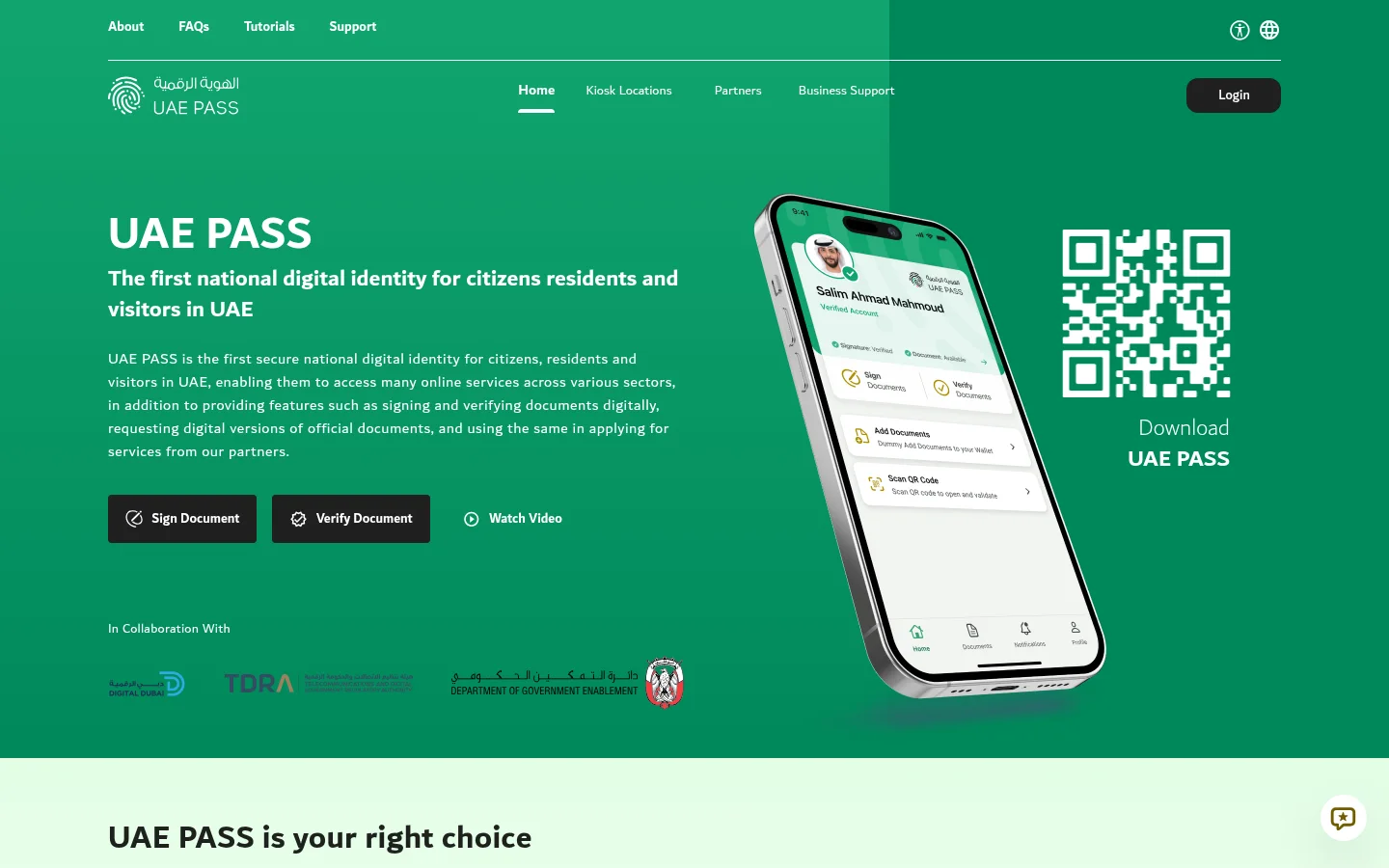
UAE Pass is the national digital identity service. One developer discussion says integration is mandatory for user verification and digital signatures in UAE apps, and that apps must support Arabic right-to-left layouts. Do not read that as a blanket rule for every business app. What matters is whether your app needs to verify who a user is, or sign something digitally, and whether the entity you plan to connect to requires UAE Pass. If it does, ask the vendor for UAE Pass integration as a separate line item with its own effort estimate. We do not have a verified cost for it, and it depends on the integration and any approvals the service requires.
Personal data is the other compliance area. If your app holds customer details, ask where the data is hosted, who can access it, how long you keep it and what consent screens the customer sees. The UAE has a personal data protection law, and a developer should be able to show how the app meets it. We have not costed this for you, because it depends on the data you collect.
Customer apps carry a few store expectations too. Apple and Google both expect users who create an account to be able to delete it from inside the app, and privacy details must match what the app really collects. Build these in from the start rather than fixing them at submission.
Stage 5: Launch, testing and store submission
Testing is the stage most often squeezed when a budget runs short, and it is the one that catches the expensive problems. Ask for testing on a range of phones and screen sizes, in both languages if you use Arabic, on a weak mobile connection, and with payments run in a test environment before going live. Ask for testing as its own line in the quote, not something included without description.
Store submission has two parts. Apple and Google both charge developer account fees, and the account should be in your company's name from day one, so you own it. Review can send an app back more than once, and the fix time is not in your control. Plan a soft launch with a small group of staff or early customers before a full release, and agree who handles the first round of fixes after launch.
Stage 6: Upkeep, hosting and ongoing updates
Upkeep is the cost that arrives after you think the project is finished. It covers hosting and the backend, yearly updates to iOS and Android, changes to store rules, security patches, bug fixes, monitoring and small features. An app that is never updated stops working as phones change, so budget for it from the start.
The only published benchmark we found is from a fintech source. Fireart suggests budgeting up to 25% of development costs per year for maintenance, covering security patches and compliance with shifting regulations. Treat that as a ceiling for regulated apps, not a rule for a booking app or a staff tool. For ordinary business apps, the right figure depends on how often you plan to change the product. Ask each vendor for a monthly support retainer, what it covers, how many hours it includes and what a change request costs beyond that.
Worked example: a made-up booking app
The numbers below are made up to show the method. They are not a benchmark or a Pensact price. The inputs are:
- Discovery: AED 6,000
- Design for a customer app in English and Arabic: AED 12,000
- Build for iOS and Android, cross-platform, with a backend and one payment gateway: AED 25,000
- Launch, testing and store submission: AED 4,000
- Year one upkeep for hosting, updates and fixes: AED 6,000
The sum, line by line: AED 6,000 plus AED 12,000 is AED 18,000. Add AED 25,000 to get AED 43,000. Add AED 4,000 to get AED 47,000 for the build. Add AED 6,000 upkeep and the first year comes to AED 53,000.
Two checks follow from the same numbers. At 3.6725 AED to the dollar, the AED 25,000 build is about $6,807, and at $80 an hour that is about 85 hours of developer time. If the vendor's plan needs far more hours than that, ask why. A ceiling for upkeep at the 25% fintech figure would be AED 11,750 a year on the AED 47,000 build, but a simple booking app will usually sit well below that.
How to get a comparable quote from UAE developers
Send the same brief to at least three vendors, and ask each one to price the same list. A quote is only comparable when it includes the same items. Ask for:
- Discovery, as a separate phase with a fixed price
- Design, with the number of languages stated
- Platforms: iOS, Android, or both, and the approach
- Backend and year-one hosting costs
- Each third-party integration as its own line
- UAE Pass or other identity work, if needed
- Store developer accounts and fees, in your name
- Testing across devices and both languages
- Launch support and the first round of fixes
- A monthly retainer and the hourly rate for changes
- Who owns the code, the store accounts and the hosting
The cheapest quote often leaves several of these out. The most expensive one may include them all. Ask for the year-one total on each, because that is the number you will actually pay.
If you want a team to scope and build the app, our Websites, Apps and Software service lists 2 to 6 weeks for launch and starts from $990. An app's price depends on its scope, so we quote after discovery rather than guess. For a longer checklist on hiring, read how to hire an app agency without getting burned.
Where to start
- Write the job of the app in one sentence, and say whether it is for staff or customers.
- List every outside system it must connect to, and every person who will use it.
- Decide which languages it needs, based on what your customers actually use.
- Ask whether UAE Pass or personal data rules apply to what you collect.
- Send the same brief to three vendors and ask for the year-one total.
- Set aside an upkeep budget before you sign anything.
If you are not sure whether an app is the right tool at all, start with a free AI plan that looks at where your business loses time and money. You can get one at our free AI plan, or book a call to talk through an app brief with us. Either way, you will leave with a clearer scope and a fair idea of what it should cost.
Sources
See it in practice

Built by Pensact
Carmen Professional · A custom Shopify store for a professional nails and lashes brand: gel polish, builder gels and lash ranges, with free delivery over 20 KWD.
Questions people ask
How much does it cost to make an app in the UAE?
It depends on scope, platforms, backend and integrations, so published ranges are wide. Some UAE sources put a Dubai mobile app between AED 30,000 and AED 600,000, and a focused MVP can sit at the lower end of that. Ask each vendor to price the same brief and to include backend, hosting, store fees and testing.
How long does app development take?
We do not have a verified timeline for UAE app builds, because it depends on scope and how quickly decisions are made. Our own Websites, Apps and Software service lists 2 to 6 weeks for launch, but a larger app with many integrations will take longer. Ask for a timeline with milestones after discovery, not before.
Who builds apps for small businesses in the UAE?
Small businesses usually work with UAE-based agencies, independent freelancers, offshore development teams or in-house staff. Each has trade-offs in cost, communication and who owns the code and store accounts. Whichever you choose, make sure the company's name is on the developer and store accounts from day one.
How much should I budget for maintenance after launch?
The only published benchmark we found, from a fintech source, suggests up to 25% of development cost per year. That is a ceiling for regulated apps, and a simple business app will often need less, depending on how often you change it. Ask each vendor for a monthly retainer, what it covers, and what changes cost beyond it.
Keep reading
How to save time and money with AI, without the wrong tools
A practical method for owners: log your week, rank tasks by time and error cost, then prove the saving with a 30-day check before you buy more tools.
Noah Hany · 6 Nov 2026
AI automation agency Dubai: what to check before you sign
Most AI agency proposals sound alike. Here is what a UAE business should check on language, data, currency, ownership and track record before signing.
Noah Hany · 6 Nov 2026
AI automation mistakes to avoid: 8 errors that cost small firms
Eight errors that send small firms into expensive rework, and the fix for each one you can apply this week.
Noah Hany · 6 Nov 2026