Playbooks
8 min readBusiness process automation service: how to compare quotes
Three made-up quotes for one workflow, read line by line. Learn where hidden costs sit and what a fair scope looks like for a 10 to 20 person firm.
Every business process automation service quotes differently, so two prices for the same job can be impossible to compare. One firm lists five line items. Another sends a single number and a calendar link. This guide shows what should be in a quote, where the costs hide, and what a sensible scope looks like for a 10 to 20 person business.
What a business process automation service actually includes
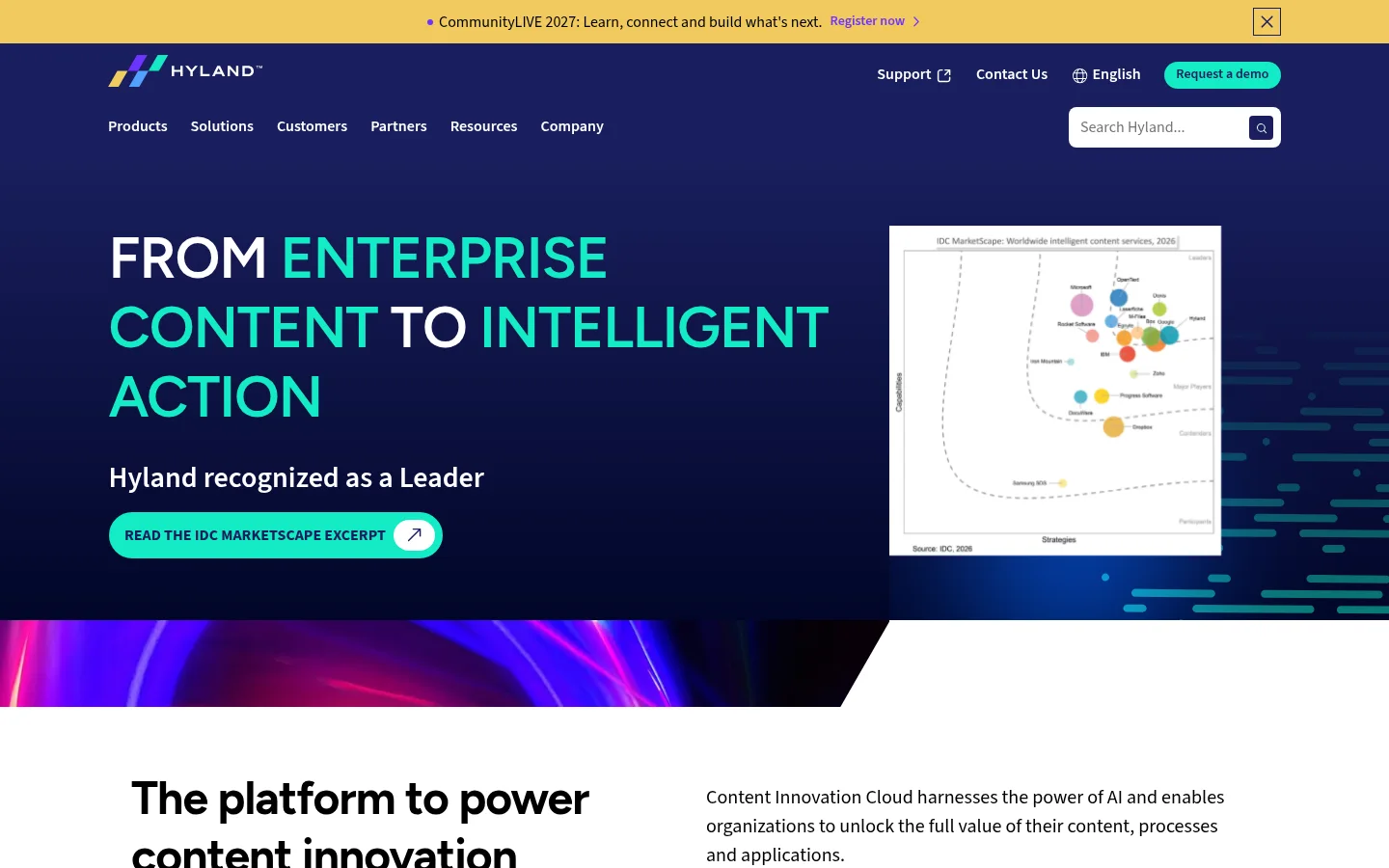
Hyland defines business process automation as using software to automate repeatable business activities, with gains in accuracy, efficiency, visibility and compliance. ScienceSoft says the aim is to reduce manual effort and human error by automating rule-based tasks. That is the what. It tells you nothing about what you are paying for.
In practice, a service is six pieces of work: working out the process, building it, testing it, running it somewhere, looking after it, and changing it when your business changes. A quote that skips any of the six has not removed the cost. It has moved it to you, usually later.
There is also a choice of how you buy. Virtustant lists three routes: an agency project plus a monthly retainer, a freelancer paid by the hour, or a specialist hired onto your team. Each prices the six pieces differently, which is why line-by-line reading matters.
The line items to check in every automation quote
Use this as a checklist. If a line is missing, ask whether it is included, priced separately or not offered.
Discovery
This is mapping the current process: who does what, which tools are involved, where the exceptions are. It should end with a written scope you can hold the provider to. Ask whether the fee is credited against the build if you go ahead.
Build
The actual workflow, connections between your tools, and any AI step such as reading an email or drafting a reply. Check how many systems it connects and what happens when an input is odd or missing.
Testing
Testing with your real data, not sample data. It should include the awkward cases: the blank field, the duplicate, the customer who replies to the wrong thread. Ask who signs off and what happens if it fails after launch.
Hosting
Something has to run the automation. It might be a platform account in your name, a server the provider manages, or both. Ask who owns the account and whether you can take it with you.
Support
Support means someone watches for failures, fixes them and keeps connections working when a tool updates its software. Ask for the response time in writing and whether the first weeks after launch are covered.
Change requests
Your process will change. Ask how a change is priced: hourly rate, fixed menu, or a block of hours each month. A low build price with a high change rate is a common trap.
Side-by-side example: reading three quotes for the same workflow
The numbers below are made up to show the method. They are not Pensact prices and not market averages.
The workflow: a web enquiry arrives, the details go into the CRM, a draft quote is created, the team is notified, and follow-up emails go out on a schedule. The business has 15 people.
Inputs for all three quotes, in pounds:
- Quote A: build £2,400. No discovery or testing line. Change requests £95 an hour. No support offered. Runs in your own accounts.
- Quote B: discovery £600, build £3,000, testing £400. Two weeks of support after launch, then a £150 monthly retainer from month 2. Change requests £80 an hour. Runs in your own accounts.
- Quote C: discovery £1,500, build £5,500, testing £1,000, hosting setup £500, then £60 a month hosting. Support retainer £400 a month. Up to 4 change hours a month included.
- Shared assumptions: tool licences cost you £40 a month in every case (£480 a year). You need 6 hours of changes in the year.
Here is the first-year total for each, line by line.
| Line | Quote A | Quote B | Quote C |
|---|---|---|---|
| Discovery | £0 | £600 | £1,500 |
| Build | £2,400 | £3,000 | £5,500 |
| Testing | £0 | £400 | £1,000 |
| Hosting | £0 | £0 | £500 setup + £720 (12 x £60) |
| Support | £0 | £1,650 (11 x £150) | £4,800 (12 x £400) |
| Changes (6 hours) | £570 (6 x £95) | £480 (6 x £80) | £0 (inside included hours) |
| Licences | £480 | £480 | £480 |
| First-year total | £3,450 | £6,610 | £14,500 |
The sums: Quote A is 2,400 + 570 + 480 = 3,450. Quote B is 600 + 3,000 + 400 = 4,000, plus 1,650 = 5,650, plus 480 = 6,130, plus 480 = 6,610. Quote C is 1,500 + 5,500 + 1,000 + 500 = 8,500, plus 720 = 9,220, plus 4,800 = 14,020, plus 480 = 14,500.
What the table shows: Quote A looks cheapest because testing, support and discovery are not there. Nobody has written down what the workflow should do, and nobody is on the hook when it breaks. Quote C is thorough but heavy for one workflow in a small firm, and most of the cost is the retainer. Quote B is the shape most 10 to 20 person businesses should be comparing against.
Where hidden costs sit in automation projects
Hidden costs are rarely lies. They are things the quote does not mention. These are the usual places.
- Licences. The tools the automation connects to often charge per user or per task. Those bills go to you, not the provider, and they rise as volume rises.
- Hosting and accounts. If the provider hosts it, ask what happens to the automation if you leave. If it lives in their account, you may have to rebuild it.
- Discovery that does not count. A paid discovery that is not credited against the build means you pay for the same thinking twice if you switch provider, or pay it on top if you stay.
- Support retainers. A monthly fee after launch is normal, because connections break and tools change. What matters is what it buys: monitoring, fixes, a number of change hours, or just a promise to reply.
- Change requests. The first change is often the one you did not know you needed, such as a new field or a second pipeline. Rates and minimum blocks of time vary a lot.
- Your own time. Someone on your team will spend hours explaining the process, testing and fixing data. Nobody puts that on the quote, so budget for it.
Setup prices in the market are wide. A pricing guide from Digital Agency Network, quoted by Virtustant, puts AI automation setup at $2,500 to $15,000 and above. So a price on its own tells you little. What it covers tells you everything. For more on how providers structure fees, see our guide to AI automation agency pricing: retainer, project or per workflow.
What a fair scope looks like for a 10 to 20 person business
At this size you do not need an automation programme. You need one or two workflows that remove a daily or weekly chore, done properly. A fair scope has these features:
- One workflow, clearly bounded. Start to finish, with named inputs and outputs. "Enquiry to draft quote" is a scope. "Automate sales" is not.
- Short discovery, written down. Often a couple of hours of calls and a one or two page map. It should name the exceptions, since that is where the time goes.
- A fixed build price against that written scope, with a clear definition of done.
- Testing on your real data, with you signing off.
- A small support arrangement. Either a modest retainer or a set number of hours, not a large monthly fee for a single workflow.
- Change requests priced up front, either an hourly rate or a block of hours.
- Your accounts, your data. You should be able to see the workflow and take it elsewhere.
Timescales should be short too. Our own AI Systems & Automation service starts from $499 and typically takes one to three weeks, depending on what is being connected. If someone quotes months for one workflow, ask why.
The quality of the quote depends on the quality of the brief. Our guide on how to brief an AI agency so you get a fair quote covers what to write down before you ask anyone.
BPA vs RPA: which one your quote should be describing
The two terms get mixed up in quotes, and it changes what you are buying. Hyland says BPA automates a process from beginning to end, while RPA focuses on tasks with little to no variance, such as copying and pasting data.
For most small firms, the work is a process across several tools: a form, a CRM, email, a spreadsheet, an accounting package. That is business process automation. RPA makes sense when you are stuck with older software that has no way to connect, and a bot has to click through screens like a person. If a quote describes bots mimicking clicks and your tools all have standard connections, ask why.
We go deeper on this in robotic process automation vs AI automation.
BPA and RPA at a glance
BPA (business process automation)
- Automates a process from beginning to end
- Focuses on the process
- Works across systems
RPA (robotic process automation)
- Automates tasks with little to no variance, such as copying and pasting data
- Focuses on the task
- Works within systems, and is useful when older software does not support integrations
Read the scope. If it covers a whole process across several tools, the quote is describing BPA. If it only moves data between screens, it is describing RPA.
Questions to ask a business process automation service before signing
Take this list to every call. The answers matter more than the price.
- What exactly is the workflow you are automating, and where does it start and stop?
- Is discovery paid, and is it credited if I go ahead?
- What is tested, on whose data, and who signs it off?
- Where does it run, and who owns the account?
- What does the monthly fee cover, in hours and response times?
- How are change requests priced, and is there a minimum?
- What licence or usage costs will I pay to other companies?
- What happens if I want to stop? Can I take the workflow with me?
- What fails most often in projects like this?
The last question is a good test. A provider who has built these before will have a direct answer. Our list of AI automation mistakes to avoid shows what those answers tend to look like.
Where to start
- Pick one workflow that costs your team time every week.
- Write down the steps, the tools and the three most common exceptions.
- Ask two or three providers to quote against that same page.
- Put each quote into the six lines: discovery, build, testing, hosting, support, change requests.
- Add licences and an estimate of your own team's time.
- Compare first-year totals, not build prices.
If you would rather have a second pair of eyes on a quote you already hold, or want a plan before you ask anyone, you can get a free AI plan from us or book a call and we will go through it with you.
Sources
See it in practice

Built by Pensact
Go Way · A ride-hailing app for Egypt where riders pick the offer that suits them, across car, scooter or tuk-tuk. We built its systems and CRM.
Questions people ask
What does a business process automation service include?
It should cover discovery, build, testing, hosting, support and change requests. Hyland describes the goal as automating repeatable activities to improve accuracy, efficiency, visibility and compliance. If a quote leaves one of the six out, ask who pays for it.
How do I compare automation quotes from different providers?
Give every provider the same written workflow, then split each quote into the six lines. Add licence costs, support and a realistic number of change hours to get a first-year total. The build price alone will mislead you.
What hidden costs come with automation projects?
The usual ones are tool licences, hosting, discovery that is not credited to the build, support retainers and change request rates. Your own team's time for explaining and testing is the one nobody quotes. Ask about all of them before you sign.
Is a monthly retainer for automation normal after the build is finished?
Yes, in most cases, because connections break and tools change. What matters is what it buys. Ask for monitoring, fixes and included change hours in writing, and check you can stop it without losing the workflow.
What is the difference between business process automation and robotic process automation?
Hyland says business process automation handles a process from start to finish, while RPA handles repetitive tasks with little variation, such as copying data. RPA is most useful when older software cannot connect to anything else. Most small firms need the first kind.
Keep reading
How to brief an AI agency so you get a fair quote
A one-page brief you can send unchanged to three agencies. Cover the process, volume, systems, result and budget, and the quotes become easy to compare.
Noah Hany · 9 Nov 2026
How to Choose an App Development Agency in MENA
A practical way to compare agencies across the UAE, Saudi Arabia and Egypt, test their portfolios and read fixed-price and time-and-materials quotes.
Noah Hany · 8 Nov 2026
How to check AI agency reviews before you hire
Reviews are easy to fake in AI services. Here is where honest ones live, what red flags look like and the five questions to ask a reference.
Noah Hany · 8 Nov 2026