AI & Automation
8 min readAI automation for restaurants UAE: the admin you can hand off
Owners of one or two UAE restaurants lose hours a week to admin. Here are the five tasks AI can take on, the order to tackle them and what setup asks of you.
Owners of one or two restaurants in the UAE lose hours every week to admin that has nothing to do with food, and AI automation for restaurants UAE operators can realistically take over is narrower than most vendor pages suggest. This guide covers five tasks that repeat every day, the order we would tackle them in for a single site, and what each step asks of your time before it starts to pay back.
AI automation for restaurants UAE: what it means for one site
In practice, AI automation means a tool that reads a message, a file or a schedule, does one defined job, and either finishes it or hands it to a person when it hits something it cannot handle. It is not a robot manager. For a restaurant with a small team, it might be a booking assistant that answers WhatsApp at 11pm, a reminder that goes to staff without you typing it, or a sheet that flags a delivery app payout that came in short.
Adoption is already common in the region. PwC Middle East research, as summarised by Beam AI, found that 64% of UAE companies planned to increase their automation investment in 2025 (Beam AI). SevenRooms reports that 87% of UAE restaurants use AI in some form, with marketing and repetitive tasks among the most common uses (SevenRooms). Those figures describe the market, not your margins. Read them as a sign the tools are mature enough to test, not as proof they will pay for your site.
Keep the scope small. Pick tasks that happen many times a week, follow a pattern and have a clear result. Anything that needs judgement about your menu, your staff or a difficult guest stays with you.
The admin tasks worth automating first
Bookings
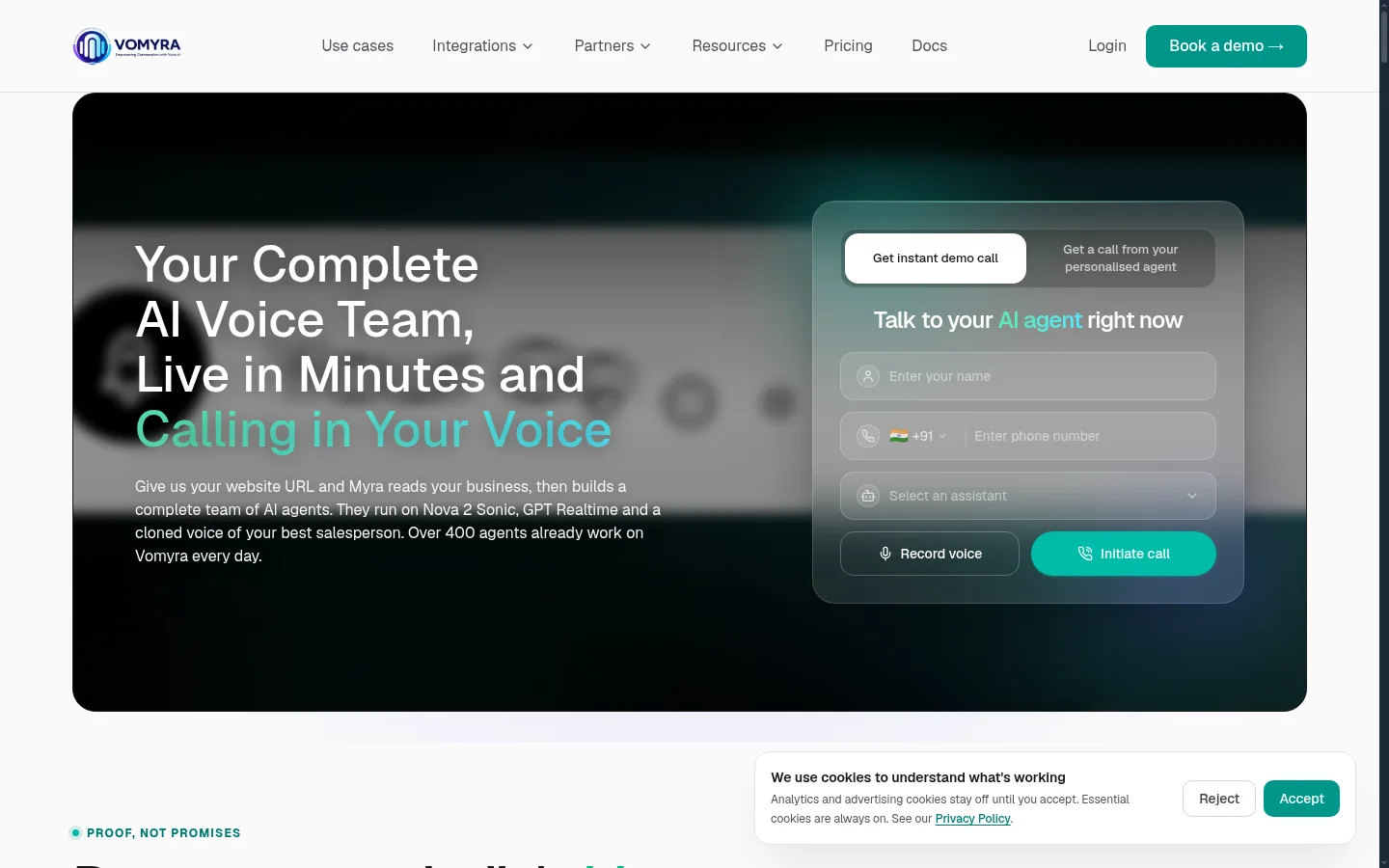
Bookings are the easiest win to explain and the easiest to measure. A reservation agent can collect name, date, time, party size and contact details, check availability, and offer another time if the slot is full. VoMyra describes this workflow for restaurants (VoMyra). It only works if it is connected to your real booking book or system, or it will promise tables you do not have.
Set hard rules before you switch it on. Decide the maximum party size for online booking, how large groups and private dining are handled, and when the assistant must hand over to a person, for example for allergies. WhatsApp is usually the simpler start, because many diners already message restaurants there. Phone answering needs a line that forwards cleanly and a fallback for mis-heard names.
Supplier orders
This is where stock gets ordered. The idea is to set par levels for your most-bought items, let the system draft orders each morning from your sales and stock counts, and send them to a person for approval before they reach suppliers.
Forecasting is the part to test, not trust. A chef's LinkedIn post describes AI scheduling improving forecast accuracy by 20% and predicting a Tuesday cover count six days ahead, drawn from chain and hotel case studies (LinkedIn, Avinash Mohan). That is one practitioner describing other businesses, not a controlled test. Run the forecast beside your own ordering for a few weeks and see whether it beats your experience. Also check how your suppliers take orders. If they only accept phone calls, the saving shrinks to a copy-and-paste job.
Staff rota reminders
Reminders are low risk: a message the night before a shift, a prompt when the rota changes, a nudge when someone has not confirmed. The tool needs the rota in a form it can read, a list of staff numbers and an agreed rule for swaps. It should not decide who works when. Keep that with a person. Setup is quick, and the payoff is mostly fewer no-shows and fewer messages from you on a Thursday night.
Review replies
Drafting replies to Google and other review sites can save real time in busy weeks. Let the system draft replies to everything, but treat positive and negative reviews differently. Positive reviews can be posted with light checking once you trust the drafts. Negative reviews, anything naming a staff member, and any mention of food safety, allergies or a legal complaint should be approved by you before posting. An unchecked reply to a bad review can make a bad week much worse. Set the tool to flag anything below four stars for a human read.
Invoice matching
The phrase covers two different jobs. The first is delivery app payouts. A tool of the kind CodexaAI describes uploads the weekly platform statement, matches each order to its payout and surfaces missing or short-paid orders (CodexaAI). That is well defined and worth doing early.
The second is supplier invoices against goods received. That needs delivery notes, purchase orders and a consistent item list from each supplier. It is harder, because suppliers describe the same product differently from week to week. Leave it until your ordering data is clean.
Cashier shift closing, with the workflow
Before
- Shift closing takes 25 to 40 minutes
After
- Shift closing takes 5 to 10 minutes
Operator ranges from CodexaAI, codexaai.io/industries/food-beverage. Payback is typically 60 to 90 days for Phase 1 and Phase 2 combined, per the same source.
A simple order of work for a single-site restaurant
- Week one: write down what happens now. For each of the five tasks, note who does it, how often, and where the information lives.
- Bookings. Connect an assistant to WhatsApp, test it with staff for two weeks, then open it to guests.
- Rota reminders. Move the rota into one shared place, switch on reminders and run them for a month.
- Review replies. Draft mode only at first. Turn on posting for positive reviews after you trust the drafts.
- Supplier orders. Set par levels, run draft orders beside your normal process for a few weeks, then approve them.
- Delivery payout matching. Run it weekly once orders flow cleanly from your till system.
- Supplier invoice matching. Last, if at all.
The logic is simple. Bookings and reminders show results fast with little risk. Supplier orders depend on stock data. Invoice matching depends on everything else being tidy.
Setup time for each step and what it takes from you
| Step | What you hand over | What drives setup time | Your hands-on time |
|---|---|---|---|
| Bookings | Booking rules, table types, FAQ answers | Booking system link, number of rules, WhatsApp or phone | Medium |
| Rota reminders | Rota in one place, staff numbers, swap rule | How messy the rota is today | Low |
| Review replies | Tone guide, sensitive-topic list, approval rules | Number of review sites | Low to medium |
| Supplier orders | Par levels, supplier order channels, sales history | Whether suppliers take digital orders | High |
| Delivery payout matching | Weekly platform statements, till export | Export format from your till | Low to medium |
| Supplier invoice matching | Delivery notes, purchase orders, item lists | Consistency of supplier naming | High |
The total depends on your till system, your booking tool, how tidy your records are and who on your team owns the work. We have not put an hour figure against each step, because any number written without your data would be a guess. Ask any provider to give you one for your site, in writing, with the assumptions listed.
Worked example: a made-up week for a 60-seat restaurant
The numbers below are invented to show the method. They do not come from a real restaurant.
Inputs:
- Owner time on bookings by phone and WhatsApp: 3 hours a week (made up)
- Hours the assistant is expected to take over: 2 hours a week (assumption)
- Owner time to set up the booking assistant, rules and testing: 6 hours (made up)
- Owner time to check flagged bookings each week: 20 minutes (made up)
Sum, line by line:
- Gross hours saved per week: 2.00
- Less weekly checking time: 20 minutes, or 0.33 hours
- Net hours saved per week: 2.00 minus 0.33 = 1.67
- Payback in weeks: 6 divided by 1.67 = about 3.6, so roughly 4 weeks
Change any input and the answer moves. If a manager already handles bookings, the owner's saving may be close to zero and the case weakens. The sum also leaves out tool subscription fees, which vary by provider and plan, so add your real figure before you decide.
Where automation fails and what to keep human
Keep these with a person: complaints, allergy questions, staff disputes, pricing decisions, unusual group bookings, calls with suppliers you are trying to keep, and anything with legal weight.
Expect errors early. A booking assistant can double book a table if your book is not the single source of truth. A supplier order can duplicate a case of something if par levels are wrong. Check the output every day for the first few weeks, then move to spot checks once the errors stop. Also find out where guest and supplier details are stored and who can access them, before you connect anything.
How to judge whether it is worth it for one site
Use this checklist:
- The task happens several times a week.
- You can name the person who does it and roughly how long it takes.
- The inputs live in a system or file you can export.
- A mistake is cheap and easy to spot.
- You can finish the worked-example sum with your own numbers and the payback is a few months, not a few years.
- You are not planning to change your till or booking system within the next few months.
If most boxes are ticked, test one task. If not, fix the data first. For a wider view of whether agentic tools suit a small business right now, read our notes on whether agentic AI is worth it for a small business.
Questions to ask a vendor before you buy
- Which of these five tasks have you built for a restaurant, and can I speak to one of those clients?
- What is my side of the setup, in hours, for my till system and booking tool?
- Who approves a draft before it reaches a guest or a supplier?
- Where is guest and supplier data stored, and can I export all of it?
- When the system cannot answer, who picks it up, and how quickly?
- Do your payback figures come from restaurants like mine, or from other sectors?
- What does it cost to stop, and do I keep my data when I do?
Compare vendors on setup time and checking time, not on the feature list.
Where to start
- List your five admin tasks with the hours each one takes per week.
- Pick one, usually bookings or rota reminders, and test it for two weeks.
- Fill in the worked example with your own numbers.
- Put the questions above to three vendors and compare their answers on setup time.
If you want a straight view of which of these fits your restaurant, get a free AI plan or book a call and we will walk through your week with you. If you want to see how we scope AI systems and automation for multi-step work, or how we price it for Dubai businesses, read what to check before you sign with an AI automation agency in Dubai.
Sources
See it in practice

Built by Pensact
Go Way · A ride-hailing app for Egypt where riders pick the offer that suits them, across car, scooter or tuk-tuk. We built its systems and CRM.
Questions people ask
How can a restaurant use AI automation?
Most restaurants start with bookings, rota reminders and review drafts, because these repeat often and are easy to check. Each tool does one defined job and hands anything unusual to a person. Supplier ordering and invoice matching come later, once your stock and supplier data is clean.
What admin tasks can a café automate?
A café can automate table or slot bookings, staff shift reminders, draft replies to online reviews, supplier orders from par levels, and matching delivery app payouts to orders. Anything involving complaints, allergies or legal wording should stay with a person. Check each task against how many times it happens a week before you start.
Is AI automation worth it for a single restaurant?
It can be, if the tasks repeat often and the owner or manager spends real hours on them. Do the sum with your own numbers: setup hours divided by the net hours saved each week gives a payback period. If the payback is measured in months and the checking time stays low, it is worth testing one task.
Can AI take bookings for a UAE restaurant over WhatsApp or phone?
Yes, a reservation assistant can collect the guest's details, check availability and offer another time if the slot is full. It only works properly when it is connected to your live booking system, and it should hand over to a person for large groups or allergy questions. WhatsApp is usually the simpler start, with phone answering added later.
Keep reading
AI agent liability UK: who pays when an agent gets it wrong
An AI agent cannot be sued, so the business that deploys it usually carries the liability. Here is what to control before the next mistake.
Noah Hany · 12 Nov 2026
AI automation for estate agents: leads and admin to fix first
AI automation for estate agents works best between a Rightmove or Zoopla enquiry and a booked viewing. Here is what to switch on first and what stays with a person.
Noah Hany · 11 Nov 2026
AI automation for tradespeople: quotes, jobs and invoices
Most trade admin leaks between the first call and the paid invoice. Here is which steps AI can run and which ones you should keep.
Noah Hany · 11 Nov 2026