News
6 min readIs AI self-checkout for small shops worth the money?
AI self-checkout is sold with big accuracy and loss figures. We look at what it does at the till, what the numbers mean and what to check before buying.
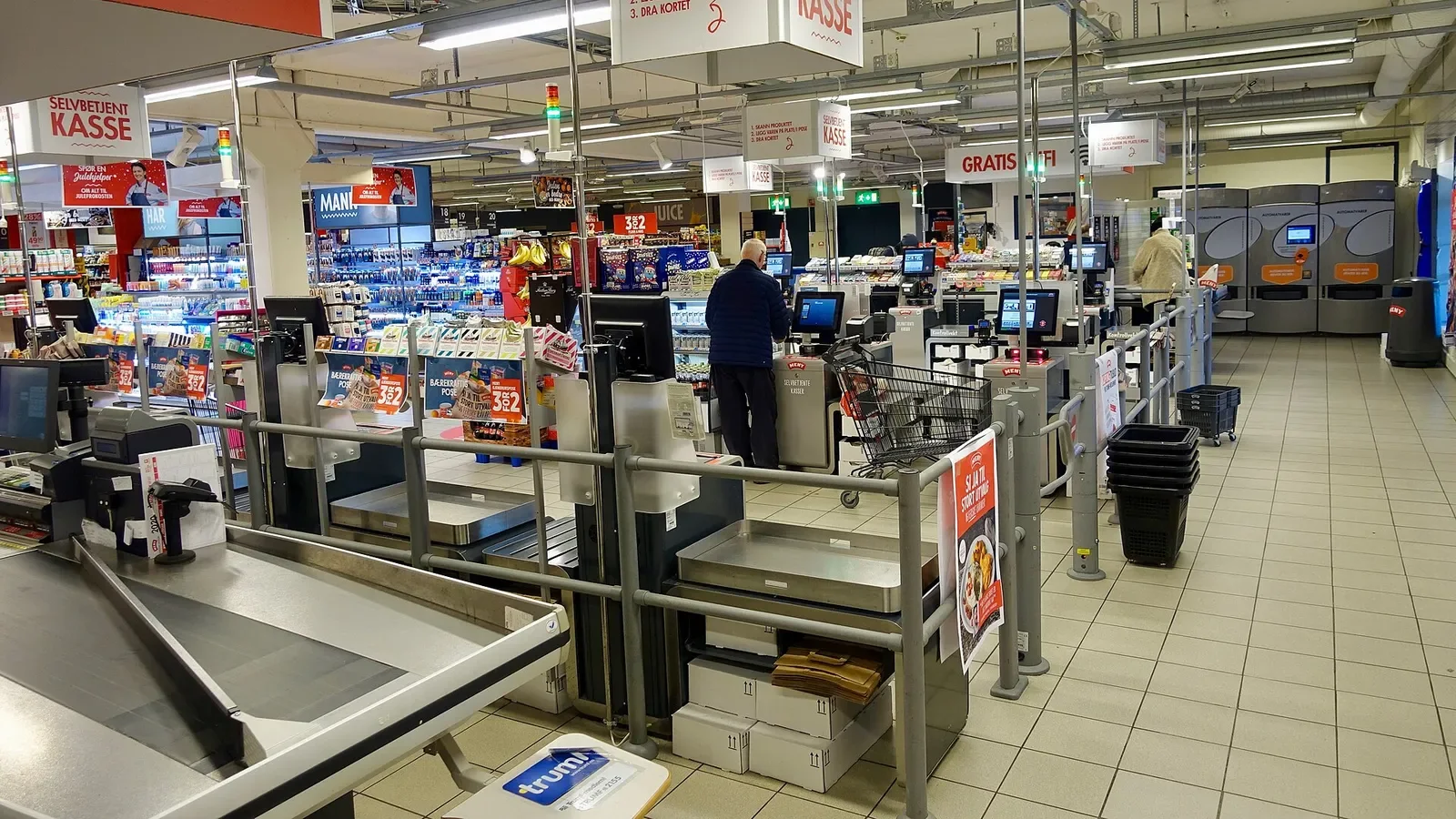
Photo: Wolfmann on Wikimedia Commons, CC BY-SA 4.0
AI self-checkout for small shops is being sold with headline accuracy and loss-reduction figures, but most of that material is written for chains, stadiums and large grocers. If you run one or two tills and can see the whole shop floor from the counter, the question is simpler: will it pay back, and what will it actually do about theft and staffing?
What AI self-checkout actually does at the till
At its simplest, the system watches what passes the scanner and checks it against what it can see. Mashgin, which sells a system built on multiple 3D cameras, says those cameras build a 3D model of each item in real time and claims over 99.99% accuracy (Mashgin). That is a claim on the vendor's own site. We haven't seen independent testing of it.
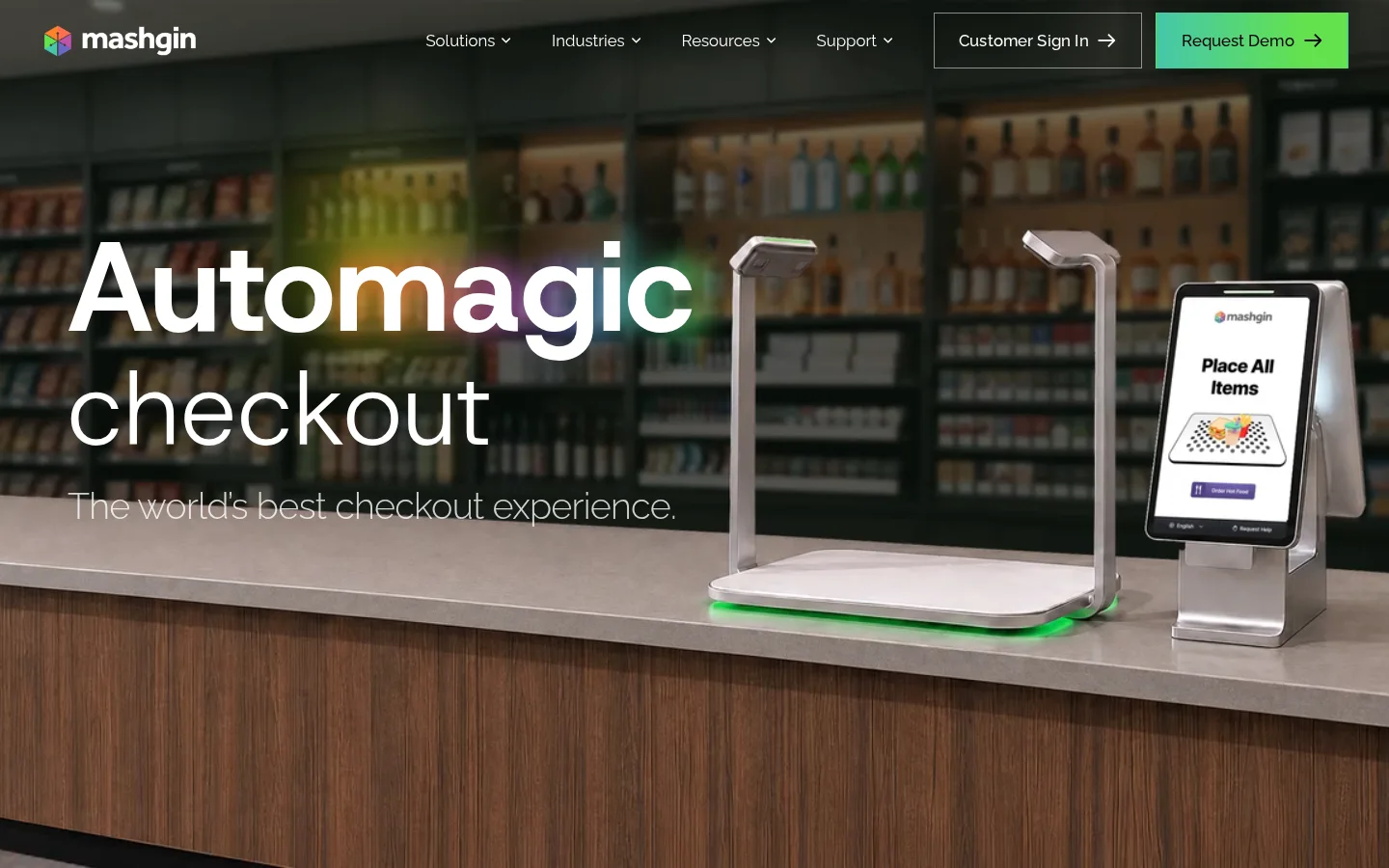
Other systems add a different layer. SeeChange describes vision AI that flags unscanned items and prompts the shopper on screen. It says 80% of shoppers self-correct when nudged in this way (SeeChange). That is also a vendor claim. The useful thing to take from it is what the software does: it spots, prompts and alerts. It doesn't replace the till or the person looking after it.
How it differs from traditional self-checkout and weigh-scale systems
Traditional self-checkout depends on the shopper scanning every item and on the machine's own weight check. AI systems add cameras that look at the items themselves. For a small shop, the biggest difference is hardware.
Scandit's loss-prevention software runs on a unit at each station. It works with existing cameras, needs no in-store server, and the company says it scales from small store formats to hyperstores (Scandit). Other approaches use overhead sensor grids and edge servers, which means far more install work. An industry commentary on LinkedIn argues that for regional or independent retailers, the upfront bill for those grids, servers and custom layouts alone can kill the idea (Moschiptech).
If a supplier offers a system that combines weight and camera checks, ask them to show you on your own till how the two agree or conflict. A demo in a showroom tells you very little.
Traditional self-checkout against AI systems
Traditional
- The shopper scans every item
- The machine relies on its own weight check
- Shrink is usually higher than a cashier lane (TRUNO)
AI systems
- Cameras look at the items themselves
- Mashgin says its cameras build a 3D model of each item in real time (vendor claim)
- Scandit's unit runs at each station and works with existing cameras, with no in-store server
The camera adds a check on what passes the scanner. It doesn't remove the need for a plan for staff and shrink.
Does it reduce shrink, and what are the claims behind the numbers?
TRUNO notes that traditional self-checkout usually has a higher shrink rate than a cashier lane. It also says labour savings have usually been greater than the extra shrink (TRUNO). That is the case for self-checkout in general, and it's a useful starting point.
TRUNO also makes a point that matters for small shops. Shrink at self-checkout is often blamed on intentional theft and honest mis-scans, but it happens at manned lanes and through other kinds of shoplifting too (TRUNO). The till is not the whole story.
Reading the vendor numbers
SeeChange says its vision AI can reduce losses by up to 50%, and that half of shrink is immediately recoverable. Both are vendor claims. "Up to" is doing a lot of work in that sentence: it describes a best case. We haven't seen independent testing of either figure, or a baseline from a shop of your size.
Before you trust any percentage, measure your own shrink. If you don't know your current loss rate, that is the first job, and it costs far less than any installation. Then ask the vendor what their baseline was, over what period, in what kind of store, and whether the savings held after the novelty wore off.
Is AI self-checkout for small shops worth the upfront cost?
We can't give you a price, and any page that quotes one for a shop like yours is guessing. The cost depends on how many tills you run, whether your existing cameras and till can be used, whether you need new hardware or a subscription, and whether the install needs building work. RetailTech Breakthrough notes that small shops may not be able to afford the cameras, sensors and AI that autonomous retail needs (RetailTech Breakthrough).
Work the sum backwards. Take your annual shrink in pounds, the share you believe the system could recover, the staff hours it would free, and the full cost over the contract. Include install, maintenance, support and any staff time needed to run it. If the sum only works on the vendor's best-case figure, it doesn't work. Our piece on AI agent cost per month covers how these charges are usually structured, which helps when you compare subscriptions with one-off fees.
Which route suits your shop
You run one till and already have a camera over it
Ask for a written quote that works with that camera and till before you talk about anything else
Reusing existing cameras is one of the things that changes the cost.
You run several tills and need new cameras or sensors
Get the full cost: hardware, install, subscription, support and the end of the contract
An industry commentary says upfront costs for independent retailers can kill the idea.
The install needs building work or a custom layout
Price the work before you commit to any system
Overhead sensor grids, edge servers and custom layouts sit in the upfront bill.
You run one till and labour is already tight
Plan the rota before you count any savings
In a small shop the saving may be staff moved, not staff cut.
Will it cut staff, and what does the labour rule landscape look like?
TRUNO's point about labour savings is the strongest case for self-checkout. But in a shop with one or two tills, you may not cut anyone. You may move them. Plan the rota before you plan the savings. Who covers the till when a shopper needs help? Who handles age-restricted sales and returns? What happens when the system goes down at the busiest hour?

The clearest rule we can point to is in the US. Bloomberg Law reports that Rhode Island has a first-of-its-kind law governing self-checkout use from 2027. It is described as the first statewide mandate on staffing levels linked to grocery automation, and it requires at least one employee-run checkout for a set number of stations (Bloomberg Law). That law covers a US state, so it won't apply to a UK or MENA shop. Our view is that it shows where staffing rules on automation could go. Check your local position with your employment adviser and your insurer before you change your staffing model.
What to ask a supplier before you buy AI self-checkout for small shops
- Does it work with my exact camera and till models, or do I need new hardware? Get the answer in writing.
- What is the full cost: hardware, install, subscription, support, and what happens at the end of the contract?
- Is there a server on site, or is it a unit at each station?
- Where did the 99.99% or 50% figure come from? Ask for a case study from a store close to yours in size and footfall, and check it.
- What happens on a false alert? Who checks it, how long does it take, and who is responsible if a sale is wrongly stopped?
- How many staff hours a week does it need to run?
- Can we pilot one till for a fixed period, and what result would count as success?
- Who owns the footage and the data, and how long is it kept?
For alerts that need a person to make the final call, our guide on human in the loop automation explains where to keep a human in the process.
Privacy and data obligations to check
RetailTech Breakthrough says privacy concerns mean retailers need to explain how they use and protect shopper data (RetailTech Breakthrough). Camera systems record people, so treat this as a legal check, not an afterthought. In the UK, that means knowing your lawful basis for filming, telling shoppers they are being recorded, and limiting how long footage is kept. Ask a privacy adviser to read the supplier's data terms. If the vendor processes footage overseas, ask where, and who can access it.
Most small shops don't need the most advanced system on the market. They need to know their real shrink, the true cost, and whether the rota still works on a busy Saturday. If you'd like a straight view on whether AI checkout fits your shop, or whether something cheaper would do more, get a free AI plan or book a call and we'll go through it with you.
Sources
See it in practice

Built by Pensact
Yalla L3b · Court booking for players and a management view for court owners: reservations, rankings, ratings and nearby courts in one app.
Questions people ask
Is AI self-checkout worth it for a small shop?
It can be, but only if the numbers work on your own shrink and labour, not a vendor's best case. Start by measuring your current losses and the hours your tills take each week. If the payback depends on the top figure in a brochure, it probably isn't worth it yet.
How much does self-checkout cost?
We can't give a reliable figure without knowing your tills, cameras, and whether you need new hardware, a server or building work. Ask for a full quote covering install, subscription, support and exit terms. Overhead sensor systems usually cost more to set up than per-station units that use existing cameras.
Does AI self-checkout stop shoplifting and mis-scans?
Vendors make claims here. SeeChange says its system can reduce losses by up to 50%, and Mashgin claims over 99.99% accuracy in product identification. We haven't seen independent testing of either. The systems can flag unscanned items, but they don't stop theft on their own, and shrink also happens at manned tills.
Can AI checkout work with my existing cameras and till?
Some systems can. Scandit's software runs on a unit at each station, works with existing cameras and needs no in-store server. Others need overhead sensor grids or edge servers. Ask the supplier to confirm in writing that it works with your exact camera and till models before you pay anything.
Keep reading

ADP small business deal: what the free payroll offer covers
The ADP small business deal offers up to 6 months free payroll for firms with 1 to 49 staff who switch before 26 November. Here is what to check first.
Noah Hany · 26 Nov 2026
UK AI adoption doubled 2026: what it means for small firms
The headline says AI use doubled, but the government survey skips the smallest firms. Here is how to read the numbers and what to try first.
Noah Hany · 26 Nov 2026
AI automation lessons 2026: where a small firm should start
AI automation lessons 2026 for owners with no tech team: pick one workflow, check the data and set a measurable target before you build anything.
Noah Hany · 26 Nov 2026