AI & Automation
9 min readBest AI agency UK: how to tell the real ones apart
Most 'best AI agency UK' lists rank firms without showing how. Here are four checks you can run yourself before you hand over a budget.

Photo: Rakoon on Wikimedia Commons, CC0
If you are searching for the best AI agency UK, the first page you see will probably be a list. Those lists are useful for finding names, but they rarely help you choose between them. This guide gives you four checks you can run yourself before you commit a budget.
What best AI agency UK should mean for your business
For a business with a small team or a mid-sized firm, the best AI agency is the one that fixes a named problem, can show it has done similar work, and leaves you in control afterwards. Size matters less than fit. A firm that builds large data platforms may be the wrong choice for a clinic with 12 staff who want appointment reminders and fewer missed calls.
Start by writing down the two or three repetitive jobs that cost you the most hours. Lead follow-up, quote generation, invoicing, customer replies and weekly reporting are common ones. Once you have that list, you can judge any agency against it instead of against a generic ranking.
Adoption has moved fast. Among UK SMEs, adoption has risen from around 7% in 2022 to roughly 35% in early 2026, according to BrainBox Automations, and a third of UK businesses still have no AI plan at all. The same source names lack of expertise as the single biggest barrier. That is why the hard part is rarely finding an agency. It is checking whether the one you found knows what it is doing.
Why ranking lists are weak evidence
Most ranking pages share the same weaknesses. They publish no method for how the order was decided. Several place their own firm first. The criteria, where they appear at all, are things like 'expertise' and 'innovation', which nobody can measure from a web page.
Read the sources closely. Many of the guides on UK AI agencies come from firms that appear in them. That does not make them useless, but it does mean their order is an opinion. The useful content is usually the detail inside: a pricing model, a delivery approach, a named specialism. Pull that out and test it against the four checks below.
One guide, from &above, puts production proof first, followed by UK presence, engagement model and ownership after the build. That is a sensible order. It is also a set of questions you can put to any firm, including us.
The four checks
Check 1: a named delivery team
Ask who will build your workflows, and who will run them after launch. Get names, roles and a rough idea of how much of their week goes to your account. If the person who sold you the work is not the person who builds it, ask how the handover works and who you call when something breaks at 7am.
A good sign is a team page with real people and a clear split of responsibility: one person owns the commercial relationship, one owns the build, one owns support. A bad sign is a 'team' that is a list of job titles with no names, or a founder who promises to be hands on but cannot say who writes the code.
Check 2: a fixed first scope
A fixed first scope is a short, defined piece of work with a price, a start date, an end date and a list of what is included. It might be one workflow, such as lead capture into your CRM with an automatic first reply. It should also say what is not included and what happens if you decide to stop at the end.
Pricing across the market is inconsistent. One guide, from Fracas Digital, names two agencies that publish pricing for small-business workflow automation on Make or n8n. ORYX AI Automations offers one fixed product from £2,500 a month, starting with consulting inside the business to find where time and revenue leak. SoftSync-AI notes that Ampliflow has a higher floor price, which means slower payback for small service businesses. These figures are useful starting points, but they are not like-for-like. Ask every firm for the same thing: a fixed first scope, its price, its duration and its exit point. For more on what a brief should contain, read how to brief an AI agency so you get a fair quote.
Check 3: references you can call
Case studies are marketing. A reference is a person you can speak to. Ask for two or three past clients of similar size and sector, and ask to speak to them directly. Good agencies usually agree to one call if the work was good. If they say the client list is confidential, ask whether a reference can be given once you have signed a short NDA.
Prepare five questions. What was the brief? What was delivered, and when? What broke after launch, and how fast was it fixed? What would the client change about how they worked? Would they hire the agency again, and at what price? Review sites such as Clutch, Trustpilot and Google are worth checking too, since BrainBox Automations lists them as verifiable proof. A call will tell you more than any star rating.
Check 4: who owns the workflows
This is the check most buyers skip, and the one that causes the most pain later. Ask who holds the workflows, prompts, data, credentials and documentation. Ask what happens if you leave in twelve months. Ask whether you can export the automations, and whether they run on a platform you can log into without the agency.
The answer should be plain. You own your data and your accounts. The agency builds in tools you can access. Every credential is in your name or transferred to you at handover. Documentation is delivered at the end of the build. If the answer relies on words like 'proprietary' or 'we host it for you', ask what leaving would cost before you sign.
How to read 'best' or 'top' without evidence
Words like best, top, leading and number one are claims, not evidence. When you see one, ask three questions. Best by what measure? Who decided? What would have made them rank someone else first?
If the page cannot answer those, treat the word as decoration. Look instead for things you can check: the number of client projects, named case studies with a result and a date, reviews you can open, and a price you can compare. A claim that names a client, a result, a date and a way to call that client is evidence. A claim that says 'the UK's best AI agency' is not.
Be wary of statistics used to justify a list. An adoption figure tells you the market is growing. It does not tell you which firm to hire.
From a claim to evidence
Ask
Best by what measure?Who decided?What would have ranked someone else first?Check
Named case studiesReviews you can verify on Clutch, Trustpilot or GoogleA real team pageRed flags: rebadged agencies and AI bolted onto Zapier
Two patterns show up often. The first is the rebadged marketing agency. It has added 'AI' to the homepage, sells ads and social posts, and has no one who has built a production workflow. Ask for a live automation it has run for at least six months, not a demo.
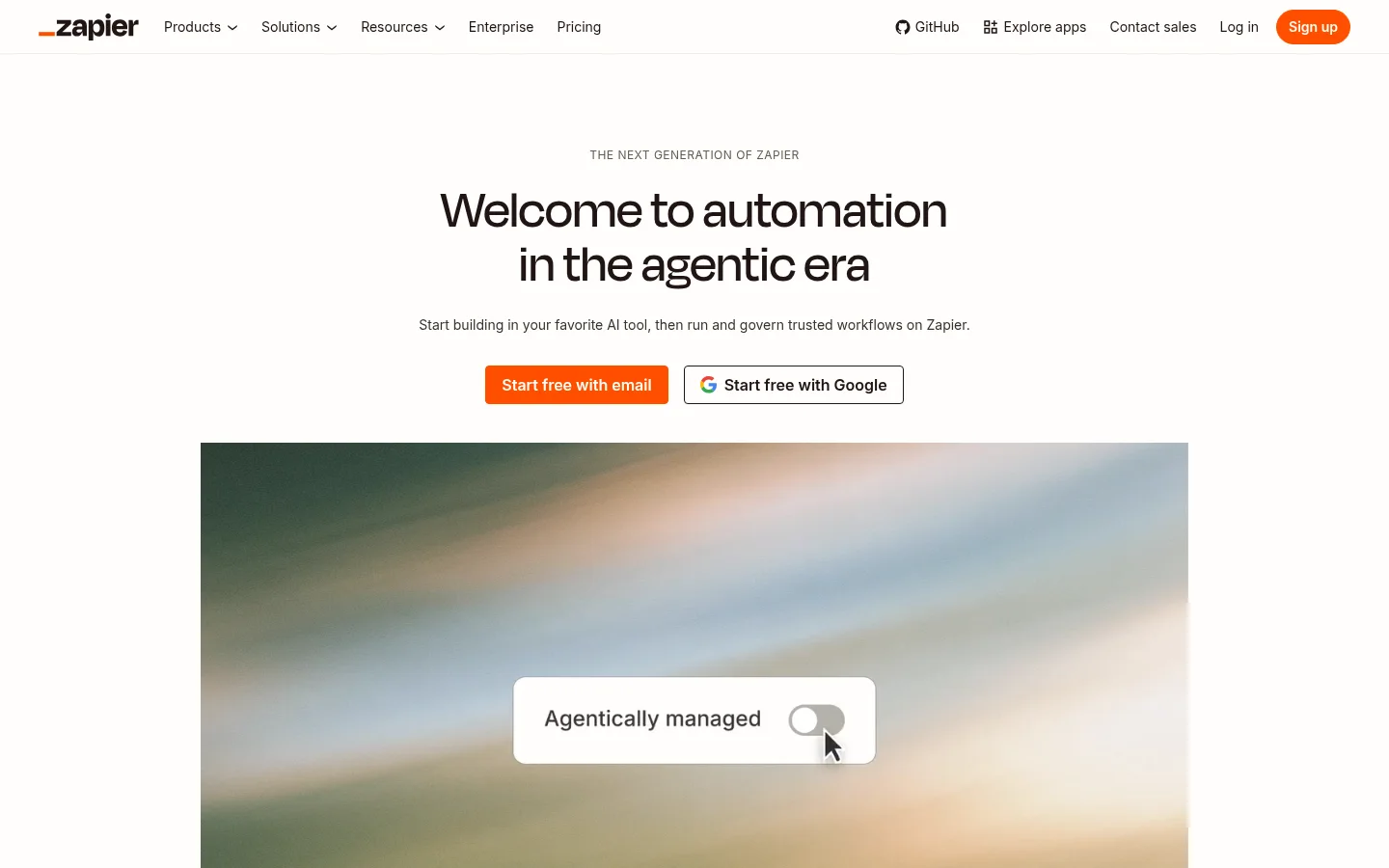
The second is AI bolted onto an existing automation tool. A firm may connect a chatbot to a Zapier or Make flow and call the result an AI system. That can be an fine approach for simple tasks. The risk is that nobody has designed for failure: what happens when the AI gives a wrong answer, when a customer is angry, or when the flow breaks overnight? Ask how the handover to a person works when the AI is unsure, and who reviews those cases.
Other flags include no written scope, a price that only appears after a sales call, pressure to sign the same day, and reluctance to let you speak to anyone who has worked with them.
Questions for the first call
Use these on the first call, note the answers and compare them across firms.
- Who will build my workflows, and will they be on the sales call?
- What is the fixed first scope, and what is excluded from it?
- What does it cost, how long does it take, and where is the exit point?
- Can I speak to two clients of similar size?
- Who owns the workflows, prompts, data and credentials once they are built?
- What happens if we stop after month three?
- How do you handle a workflow that breaks or gives a wrong answer?
Shortlisting by size and need
The right shortlist depends on what you need. A small business automating a few admin tasks has different needs from a firm with a much larger team that wants an ongoing managed service.
| Your situation | What to look for | Fixed first scope to ask for |
|---|---|---|
| SMB automation, roughly 5 to 20 staff, one or two painful tasks | Small teams with published pilot pricing and a named builder | One workflow, live within weeks, with a clear stop point |
| Managed service, roughly 20 to 50 staff, several processes | A team that monitors and runs workflows after launch, with support terms in writing | A discovery phase, then a build under a service agreement you can end |
| Mid-market, a mid-sized team, several systems and sensitive data | Experience with your CRM or data stack, and security and data handling in writing | A scoped audit, then a phased build with named owners on both sides |
Our own AI systems and automation service starts from $499 and typically runs 1 to 3 weeks. The real cost depends on how many systems are connected, how many steps each workflow has, how much custom logic is needed and how much support you want after launch. Run the four checks on us as you would on anyone else.
Where a firm has no published price, ask what its cost depends on, then ask for a number against your specific workflow. For a fuller comparison of quotes, see business process automation service quotes.
Worked example: two first scopes compared (numbers made up to show the method)
These numbers are invented to show the method. They are not quotes from any firm.
Imagine two firms both propose one workflow: lead capture into a CRM with an automatic first reply. Over the first few months, compare what you actually pay.
Firm A inputs: a one-off pilot fee; a monthly support fee for the early months after launch.
Firm B inputs: a discovery fee; a build fee; monthly hosting for the same early period.
Firm A: the pilot fee plus the monthly support fees for the early months comes to less than Firm B's total.
Firm B: the discovery, build and hosting costs add up to the higher total of the two.
Firm A looks cheaper, but the total is not the whole test. Check whether Firm A's workflow is yours to keep at the end of the pilot, and whether Firm B's hosting fee buys monitoring that Firm A does not include. The question is what you hold at the end of the first few months, not only what you paid by the end of the pilot.
Where to start
- Write down the two or three repetitive tasks that cost you the most time.
- Shortlist three firms and run the four checks on each.
- Ask every firm for the same fixed first scope, in writing.
- Call two references per firm, using the five questions above.
- Confirm in writing who owns the workflows, data and credentials.
You can get a free AI plan that shows where AI fits in your business, with no card and no obligation, or book a call if you would rather talk it through first. Either way, run the four checks on us too.
If you'd like to see where this fits in your business, get a free AI plan. We look at how you work today and show you what to automate first, with the time and money it would save.
Sources
See it in practice

Built by Pensact
Al Jouf Agricultural Development Co. · The shopping app and store for one of Saudi Arabia's largest agricultural companies, selling its organic olive oil and farm products straight to customers.
Questions people ask
How do I check an AI agency's track record in the UK?
Ask for two or three past clients of similar size and sector, and speak to them directly rather than relying on case studies. Check review sites such as Clutch, Trustpilot and Google, and ask to see a live automation that has been running for at least six months. A firm with a real track record will be able to show you all three without fuss.
What is the best AI agency in the UK?
There is no single best agency for every business, and any list that names one without a stated method is asking you to trust its opinion. The right firm depends on your size, your sector and the specific tasks you want automated. Use the four checks in this guide to compare shortlisted firms on the same evidence.
What should a fixed first scope from an AI agency include?
It should name the workflow or workflows in scope, the price, the start and end dates, and what is explicitly excluded. It should also say what you get at the end, such as documentation and access, and what happens if you decide to stop. If a firm will not put this in writing before you start, treat that as a warning.
Who owns the automations and data once an AI agency has built them?
In a fair arrangement, you own your data, accounts and credentials, and the workflows run in tools you can log into without the agency. Ask who holds the prompts and documentation, and whether you can export or move the automations if you leave. Get the answer in the contract, not just in a sales call.
Keep reading
AI automation for architects: proposals, revisions, admin
Enquiries, fee letters, revision logs and invoice chasing can often be automated safely. Planning and client-facing documents still need an architect's name and check on them.
Noah Hany · 26 Nov 2026
AI automation for hotels in Dubai: guest messages and reviews
The admin that eats a small Dubai hotel's day, what AI can safely send on its own, and what a manager must approve before it goes out.
Noah Hany · 26 Nov 2026
Clean data before AI automation: a practical checklist
The three data problems that break automations, and a one-week plan to fix them before you switch anything on.
Noah Hany · 26 Nov 2026