AI & Automation
8 min readTop RPA providers UK: what a small firm should compare
Most lists of RPA vendors mix software with consultancies. Here is how to tell them apart, and whether a firm under 50 staff needs RPA at all.
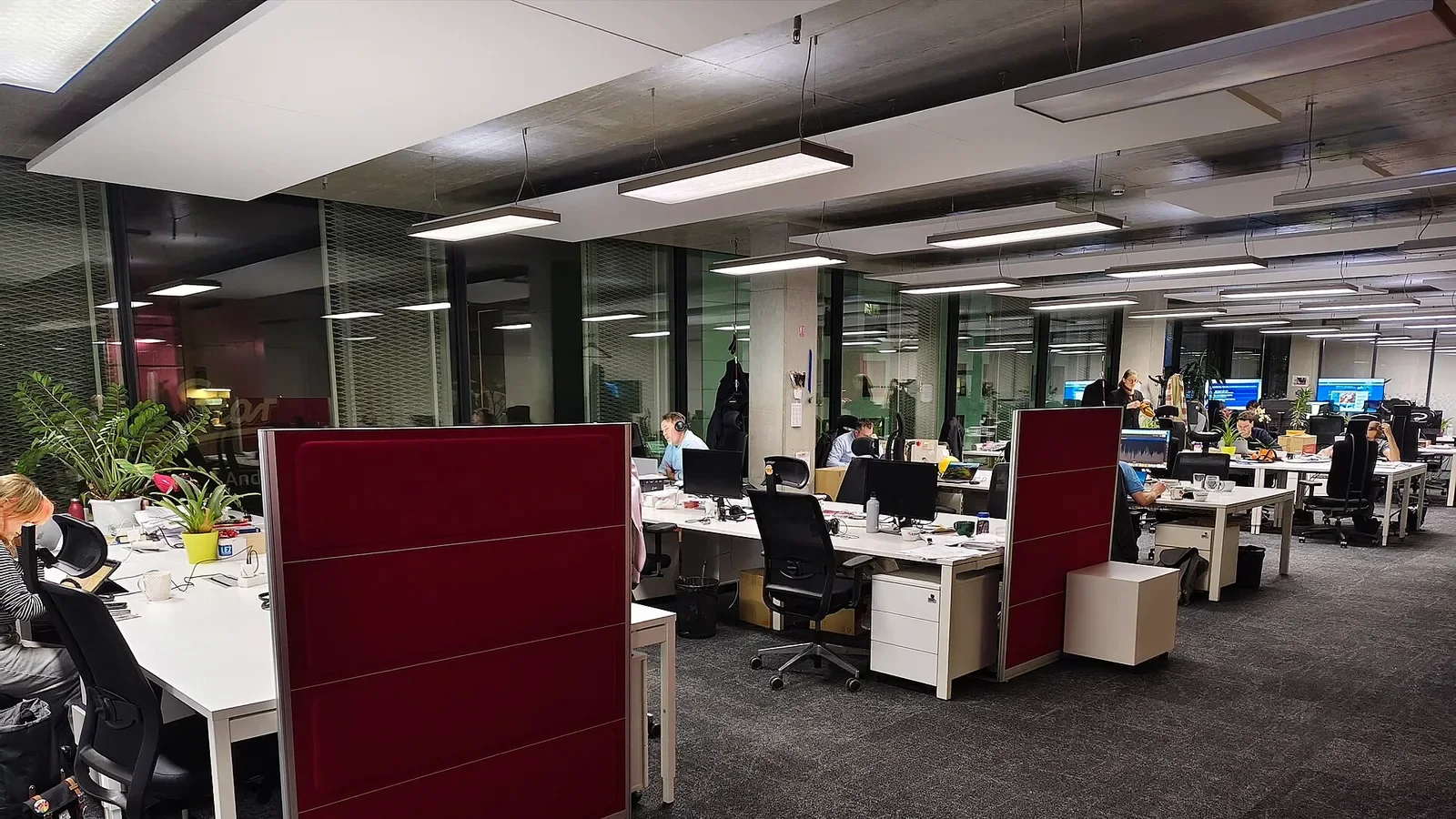
Photo: Mojmir Churavy on Wikimedia Commons, CC0
If you are searching for the top RPA providers UK owners can actually trust, you have probably found lists that mix software, consultancies and unrelated factory-automation firms. That makes it hard to tell what you could buy on Monday. This guide sorts the vendors into types, says what each is for, and tests whether a firm under 50 staff needs RPA at all.
What RPA is and whether it still matters in 2026
Gartner defines robotic process automation as software that automates tasks within business and IT processes using scripts that emulate human interaction with the application UI (Gartner Peer Insights). In plain terms, a bot clicks and types in your systems the way a person would. It copies a figure from one screen, pastes it into another and presses save.
Gartner also lists recording a task and converting it into a deployable script as a mandatory feature of the category. So the core idea is: show the bot the clicks, then let it repeat them.
Is RPA still a thing? Yes. Large firms with old systems and no integrations still use it heavily, and UiPath still carries a 4.5 rating from 2,336 ratings on Gartner Peer Insights, tagged as a 2026 customer's choice. But RPA is one tool for one kind of problem. It is not the default answer for a small firm any more.
The main types of RPA vendor
This is where most lists go wrong. They put very different companies in one ranking. RevenueBase, for example, shows 178 UK company matches for RPA software, ordered by contacts tracked (RevenueBase). That tells you who has a big sales database, not who fits a 20-person firm. Manufacturers Hub lists RARUK Automation, SIGMATEK Automation UK Ltd and Visicon Ltd as RPA suppliers (Manufacturers Hub). SIGMATEK is an industrial-automation company, which is a different world from office back-office work.
There are three types worth separating.
| Type | What you buy | Who runs it | Typical fit |
|---|---|---|---|
| Platform software | A licence for a dedicated RPA product | Your IT team or a developer | Mid-sized and large firms with many processes |
| Cloud suite tools | Automation features inside a wider business or workflow suite | A confident ops person | Smaller firms already on that suite |
| Consultancies and agencies | A built-for-you project | The supplier, then you | Firms with no technical staff |
The third group is not a product. A consultancy that implements RPA is a service, and its price depends on the platform it uses and the scope. Keep products and services in separate columns when you compare.
Who the leading platforms are and what each is built for
UiPath is the name you will see first. Vidi-Corp describes it as a market-leading RPA platform with a strong presence in the UK and globally, trusted by enterprises (Vidi-Corp). That word, enterprises, matters. It is built for organisations with many processes, governance needs and people to look after the bots.
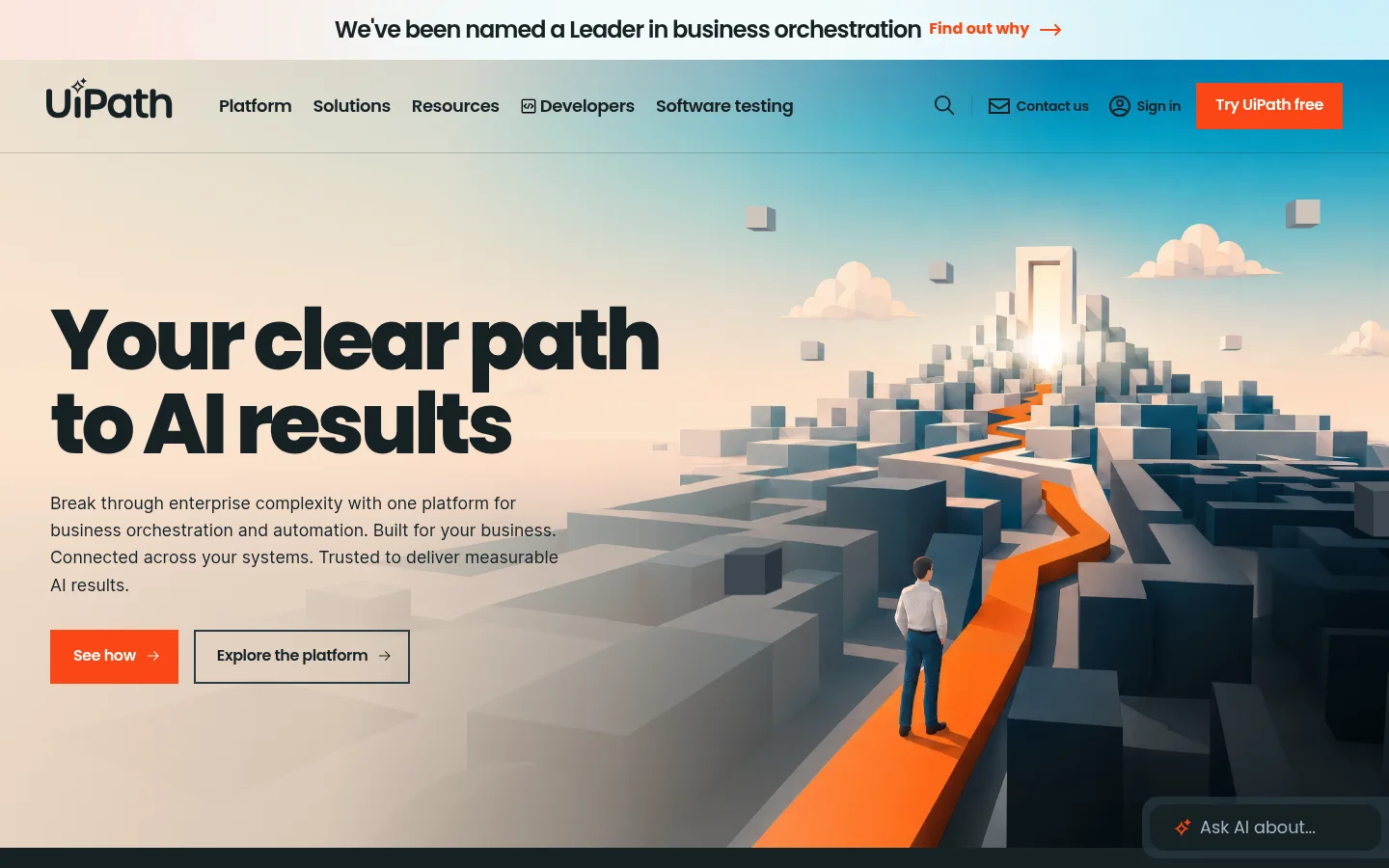
Other dedicated platforms and cloud suites exist, and each leans towards a different buyer: some towards large IT-led programmes, some towards firms already inside a big software ecosystem. Check each vendor's own site for current positioning and ask for a written quote. We are not going to rank them for you, because the right one depends on which systems your bots must work in.
There is also a warning sign from the buyer side. A user at a mid-sized firm of around 150 employees wrote on Reddit that UiPath licensing costs are becoming hard to justify for a company of their size (Reddit r/rpa). That is one person's view, not a survey. But if a 150-person firm is questioning the cost, a 20-person firm should ask harder questions still.
What an RPA licence and implementation really cost a small firm
We have no reliable public price to give you, and we will not make one up. Vendors mostly quote on request, and the figure depends on several things:
- How many bots you run, and whether they run attended (alongside a person) or unattended.
- Which modules you add, such as orchestration, document handling or analytics.
- Whether you pay per user, per bot or per year.
- Who builds and maintains the bots: your staff, a freelancer or a consultancy.
- Renewal terms, which is where costs often rise.
The licence is only part of it. Add build time, testing, and the cost of fixing bots when an app updates its screen layout. Screen-level bots are fragile in that way. A button moves, the bot fails, someone has to repair it.
When you ask for quotes, request the licence, the build and the first year of support as three separate lines. Our guide to comparing business process automation quotes covers what to ask, and how to brief an AI agency helps you write the scope.
Setup time, skills and who needs to run it
Setup time depends on the process. A simple, stable task in one application can be recorded and live fairly quickly. A messy process across five systems with exceptions will take much longer, because someone has to map every exception first.
Gartner's peer lessons learned include "Test Before You Invest" and "Standardize Before You Automate" (Gartner Peer Insights). Both matter here. If your team does the same job three different ways, a bot will not fix that. It will copy the confusion at speed.
Skills you need in-house or on call:
- Someone who understands the process end to end.
- Someone who can build and fix bots, usually a developer or trained specialist.
- An owner who checks results each week and handles failures.
- Access rights and security sign-off for the systems the bot logs into.
In a firm with no developer, point three and four often fall on the owner. That hidden workload is why many small RPA projects stall after the first bot.
Where RPA fits a firm under 50 staff, and where it does not
RPA fits when you have a high-volume, rule-based task, in a system with no API or integration, that never changes. Think of moving data between an old desktop accounting package and a supplier portal, every day, in the same way.
It does not fit when the work involves reading emails, judging documents, answering customers or handling exceptions. Those need language understanding, which a screen-clicking bot does not have.
| Task | RPA | Scoped AI workflow |
|---|---|---|
| Copy fixed fields between two legacy screens | Good fit | Possible, often overkill |
| Sort and reply to inbound emails | Poor fit | Good fit |
| Extract data from varied invoices or forms | Weak alone | Good fit |
| Lead capture, CRM entry and follow-up | Not needed | Good fit |
| Daily report built from several tools | Possible | Good fit |
The split is simple. RPA copies what a person does on a screen. AI workflow automation reads, decides and writes, then connects to your tools directly.
Where RPA fits and where it does not
RPA fits
- High-volume, rule-based task done the same way every day
- Old desktop system with no API or integration
- Steps that do not change often
RPA does not fit
- Work that involves reading emails or judging documents
- Customer questions and exceptions
- Processes that change every few weeks
If your task sits in the right-hand column, look at a scoped AI workflow first.
Why a scoped AI workflow often beats an enterprise RPA licence for small firms
Most small-firm admin is not screen-copying. It is document intake, email triage, quote chasing, booking and follow-up. These tasks are messy and text-heavy, which is exactly where an AI workflow does better than a recorded script.
A scoped workflow also changes the buying shape. You pick one process, agree what done looks like, build it, measure it, then decide on the next. There is no multi-year licence to justify first. Our intelligent process automation guide explains what AI adds on top of rule-based bots, and our piece on whether agentic AI is worth it for a small business is honest about the limits.
There are trade-offs. AI output needs checking, especially for anything with legal or money consequences, so see who pays when an AI agent gets it wrong. And if you truly have a legacy screen with no other way in, RPA may still be the right tool. We would rather tell you that than sell you the wrong thing.
Our AI Systems and Automation service builds this kind of scoped workflow, from lead capture to CRM to follow-up, with prices from $499 and a typical build of one to three weeks.
How a scoped AI workflow runs one admin process
Intake
Email or form arrivesAttachment or document is capturedRead and sort
Text is read and the request type is identifiedMissing details are flaggedAct and log
Quote, booking or reply is drafted for approvalOutcome is logged against the jobHow to choose: a short test before any spend
Run these checks before you sign anything. Is RPA worth it for a 20-person firm? Only if most answers below are yes.
- Can you name one task that is done at least daily, by hand, in the same way every time?
- Does it run in an application with no integration or API you could use instead?
- Can you write the steps on one page, including the exceptions?
- Do the inputs arrive in a fixed format, not free-text emails or varied documents?
- Do you have someone who will own and fix the bot?
- Has a vendor let you test a real process before you pay for a licence?
If you answered no to the third and fourth, look at an AI workflow first. If you answered no to the fifth, a licence will sit unused. A useful rule: count the hours the task takes each week and multiply by your loaded hourly cost. If a year of that is less than a year of licence, build and support, do not buy.
Where to start
- List your ten most repetitive tasks and note the tool each one runs in.
- Mark which are screen-copying and which involve reading or writing.
- Standardise the one you pick before automating it.
- Ask for a test on a real sample, with licence, build and support priced separately.
- Measure hours saved after a month, then decide on the next task.
If you want a second pair of eyes, you can get a free AI plan that lists the tasks AI can take over in your business, or book a call and talk it through with a strategist. Get your free AI plan or book a call.
Where to start
- 1
List your ten most repetitive tasks
Note the tool each one runs in and how often it happens.
- 2
Mark screen-copying against reading and writing
Screen-copying suits RPA. Reading and writing suits AI workflows.
- 3
Standardise the one you pick
Agree the steps and exceptions before anything is automated. Gartner's lesson is to standardise before you automate.
- 4
Ask for a test on a real sample
Price the licence, build and support separately.
- 5
Measure hours saved after a month
Compare against the hours you logged before the change.
Sources
See it in practice

Built by Pensact
Go Way · A ride-hailing app for Egypt where riders pick the offer that suits them, across car, scooter or tuk-tuk. We built its systems and CRM.
Questions people ask
Who are the top RPA providers in the UK?
UiPath is the most widely cited platform, and Vidi-Corp describes it as market-leading with a strong UK presence. Beyond that, lists mix software vendors with consultancies and industrial firms, so sort products from services first and judge each against your own systems.
Is RPA still a thing?
Yes, mainly in larger firms with older systems and no integrations. For small firms, tasks that involve reading emails or documents are usually better served by a scoped AI workflow than a screen-clicking bot.
Is RPA worth it for a 20-person firm?
Only for a stable, daily, rule-based task in a system with no integration, and only if someone can own the bot. Otherwise a smaller, scoped AI workflow usually costs less and carries less upkeep.
What does an RPA licence cost a small business?
Vendors mostly quote on request, so we will not guess a figure. The price depends on bot count, attended or unattended use, modules, and renewal terms. Ask for licence, build and first-year support as separate lines.
Keep reading
AI automation for architects: proposals, revisions, admin
Enquiries, fee letters, revision logs and invoice chasing can often be automated safely. Planning and client-facing documents still need an architect's name and check on them.
Noah Hany · 26 Nov 2026
AI automation for hotels in Dubai: guest messages and reviews
The admin that eats a small Dubai hotel's day, what AI can safely send on its own, and what a manager must approve before it goes out.
Noah Hany · 26 Nov 2026
Clean data before AI automation: a practical checklist
The three data problems that break automations, and a one-week plan to fix them before you switch anything on.
Noah Hany · 26 Nov 2026